Unlocking the Sunshine State: Why Manufactured Housing is Florida’s Smartest Real Estate Play

The Hidden Goldmine in the Land of Palms
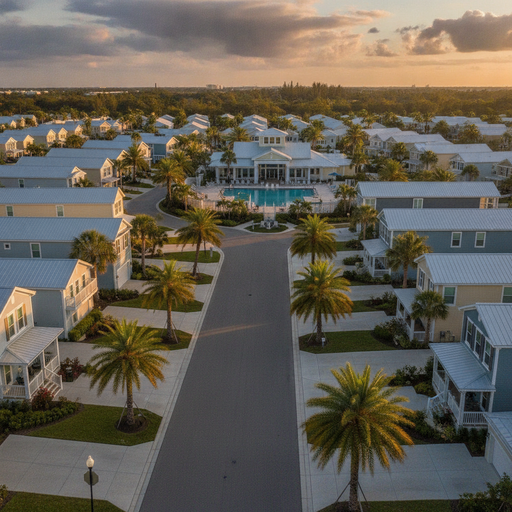
Imagine walking through a quiet, sun-drenched neighborhood in Central Florida. The streets are lined with swaying palm trees, the lawns are manicured, and there is a sense of community that feels like a throwback to a simpler time. You might think you are in a high-end gated suburb, but then you notice something different: these are manufactured homes. For the savvy investor, this isn’t just a residential area—it is a high-yield asset class that is currently outperforming traditional multi-family real estate across the state.
SUBMIT YOUR DETAILS FOR
For decades, manufactured housing (often mistakenly lumped together with the “mobile homes” of the past) carried a certain stigma. However, the tide has turned. As traditional home prices in Florida skyrocket and the influx of retirees continues to break records, manufactured housing has emerged as the “sweet spot” of the real estate market. It offers the perfect intersection of affordability for the resident and incredible cash flow for the investor. If you’ve been looking for a way to break into the Florida market without the cutthroat competition of single-family flips, you are looking in the right place.
The Perfect Storm: Why Florida?
Florida isn’t just a vacation destination; it is a demographic powerhouse. Every day, roughly 1,000 people move to the Sunshine State. Many of these new residents are Baby Boomers looking to stretch their retirement savings. When a retiree sells their three-bedroom home iew York or Illinois for $600,000, they often look to Florida for a lifestyle upgrade. However, with the average price of a traditional home in popular Florida coastal cities now exceeding $450,000, many are finding themselves priced out.
This is where manufactured housing comes in. It provides the “middle ground.” It allows a retiree to own a modern, high-quality home for $150,000 to $200,000 while keeping enough capital to enjoy their golden years. As an investor, you are providing the one thing Florida lacks most: attainable housing. Whether you are investing in individual units on private land or looking into Mobile Home Parks (MHPs), the demand is virtually guaranteed.
Understanding the Two Main Investment Paths
When investing in Florida manufactured housing, you generally have two distinct paths to follow. Each has its own risk-reward profile and management requirements.
1. The Land-Lease Community Model (Mobile Home Parks)
This is often considered the “Holy Grail” of real estate investing. In this model, you own the land and the infrastructure (roads, utility lines, clubhouse, pool), but the residents own the homes themselves. They pay you monthly “lot rent” to park their home on your land. This is an incredibly stable model because moving a manufactured home is expensive and difficult; once a home is set, it rarely leaves. You enjoy low maintenance costs because you aren’t responsible for fixing leaky faucets or broken AC units inside the homes.
2. Manufactured Homes on Private Land
In this scenario, you own both the home and the land it sits on, much like a traditional single-family rental. This is a popular strategy in more rural or suburban parts of Florida like Ocala, Polk County, or the Panhandle. Because manufactured homes cost significantly less per square foot to build than site-built homes, your “all-in” cost is much lower. However, the rent you can charge is often comparable to a traditional house, leading to much higher cash-on-cash returns.
Modern Quality vs. The Old Stigma
One of the biggest hurdles new investors face is their own perception of what a manufactured home is. We aren’t talking about the flimsy trailers of the 1960s. Since the HUD Code was established in 1976, and significantly updated over the years, these homes are built to rigorous federal standards. In Florida, modern manufactured homes are built to withstand hurricane-force winds, often performing as well as, or better than, traditional stick-built homes in major storms.
Today’s models feature open floor plans, granite countertops, energy-efficient appliances, and luxury vinyl plank flooring. To the untrained eye, a modern manufactured home with a brick skirt and a porch is indistinguishable from a traditional home. As an investor, this means you are buying a high-quality asset that attracts high-quality tenants who take pride in their homes.
The Resilience of Cash Flow in Florida
Why do investors love Florida manufactured housing during economic downturns? It’s because it is “recession-resistant.” When the economy dips, people don’t stop needing a place to live; they simply look for more affordable options. During the 2008 crash and the more recent inflationary period, manufactured housing communities maintained some of the highest occupancy rates in the country.
In Florida, this is amplified by the “Snowbird” effect. Even if the broader economy struggles, the migration of retirees to Florida remains steady. This constant pressure on the housing supply creates a floor for your investment. You aren’t just betting on property appreciation (though that happens too); you are betting on the fundamental need for a roof over someone’s head at a price they can afford.
Navigating the Challenges: Insurance and Zoning
No investment is without its hurdles, and Florida has a few specific ones you need to know. The biggest topic currently is insurance. Because of Florida’s unique weather patterns, property insurance premiums have risen. When analyzing a manufactured housing deal, you must perform deep due diligence on insurance costs. Homes built after 1994 (post-Hurricane Andrew standards) are much easier and cheaper to insure than older units.
Additionally, zoning is a major factor. Florida counties are becoming more protective of their land-use maps. It is increasingly difficult to get new manufactured home parks approved, which actually works in favor of the investor. Why? Because it limits supply. Existing parks and zones become “protected monopolies” because no one can build a competing park next door. This scarcity drives up the value of your investment over time.
Strategy for Success: The Story of a Typical Florida Flip
Let’s look at a practical example. An investor finds a 1990s-era manufactured home on a half-acre lot in Lake County, Florida. The home is dated, with old carpet and wood paneling, and is priced at $120,000. The investor spends $30,000 on a “modernization” package: new flooring, fresh neutral paint, updated light fixtures, and some basic landscaping.
Because the demand for housing in that area is so high, the home is appraised at $210,000 once finished. The investor can then choose to sell it to a retiree for a quick profit or rent it out for $1,600 a month. With an all-in cost of $150,000, the ROI significantly beats what they would have made on a $400,000 traditional house in the same area. This is the power of the manufactured housing play.
Conclusion: The Future is Manufactured
As we look toward the future of the Florida real estate market, one thing is clear: the need for affordable, high-quality housing is only going to grow. Manufactured housing is no longer the “alternative” choice; it is becoming a primary solution for a state that is growing faster than it can build.
By investing in this sector, you are positioning yourself in a market with high demand, limited new supply, and a demographic tailwind that shows no signs of slowing down. Whether you are looking for the passive income of a land-lease community or the high yields of individual rentals, Florida’s manufactured housing market offers a path to wealth that many are still overlooking. The sun is shining on this investment class—it’s time to step into the light.