
The Timeless Allure of the Rambling Ranch
Picture this: a long, low-slung silhouette stretching across a wide suburban lot, bathed in the golden hue of a late afternoon sun. This is the classic American Ranch—or “Rambler”—a style that defined a generation and continues to capture the hearts of homeowners today. Originally popularized in the 1950s and 60s, the Ranch style home was designed with a specific philosophy in mind: accessibility, informal living, and a seamless coection to the great outdoors. However, as the decades passed, many of these architectural gems lost their luster, hidden behind overgrown hedges or dated concrete slabs.
SUBMIT YOUR DETAILS FOR
Today, we are witnessing a massive revival. Homeowners are rediscovering that the horizontal footprint of a Ranch house is the perfect canvas for modern outdoor living. Whether you are looking to boost your curb appeal or create a backyard oasis that feels like a private resort, designing the exterior of a Ranch home requires a unique approach that respects its heritage while embracing modern luxury. In this guide, we will walk through the essential elements of Ranch style outdoor design, told through the lens of creating a home that breathes with the landscape.
Embracing the Horizontal Line
The most defining characteristic of a Ranch home is its emphasis on the horizontal. Unlike two-story colonials that draw the eye upward, the Ranch keeps your gaze level with the earth. When designing your landscape, your goal should be to complement this low profile rather than fight against it. Avoid planting tall, vertical trees directly in front of the house, as they can make the structure look swallowed by the greenery.
Instead, opt for layered plantings that mimic the home’s footprint. Think about low-growing shrubs, ornamental grasses, and groundcovers. By using varying heights of low-profile plants, you create depth and interest without obstructing the architectural lines of the home. This “stepped” approach to landscaping makes the house feel grounded and expansive, rather than just flat.
Designing for Curb Appeal
The front yard of a Ranch home is its handshake—it’s the first impression you give to the world. Because Ranch houses often have a long facade, they can sometimes look a bit “plain” if the entryway isn’t highlighted. To fix this, focus on creating a clear path to the front door. A wide, modern walkway made of oversized concrete pavers or natural flagstone can guide the eye and provide a sense of arrival.
Consider upgrading your siding or adding stone veneer accents to break up the long stretches of wood or brick. Adding a modern porch with clean wooden beams can also add a much-needed focal point. Lighting plays a crucial role here as well. Path lights and uplighting on a few choice trees can transform a simple front yard into a dramatic, high-end landscape once the sun goes down.
The Magic of Indoor-Outdoor Flow
The true genius of the Ranch style lies in its floor plan. Most Ranch homes were built to encourage a lifestyle where the backyard is simply an extension of the living room. If your home currently has small windows or a single standard door leading to the back, you are missing out on the best part of Ranch living. To truly unlock the potential of your property, you need to prioritize “the flow.”
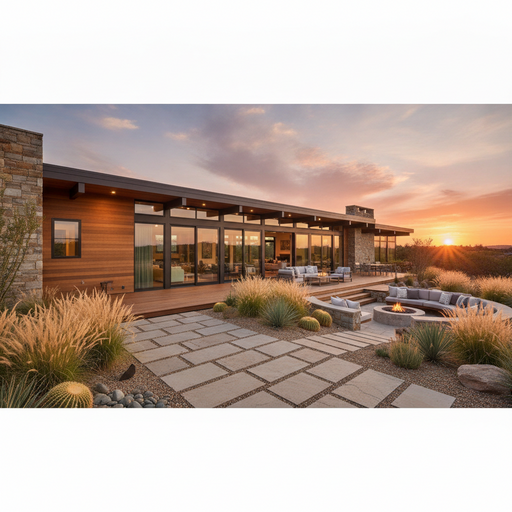
Installing large sliding glass doors or accordion-style folding doors can erase the boundary between your interior and exterior. Imagine waking up on a Saturday morning, sliding back a glass wall, and letting the scent of fresh grass and the sound of birds fill your kitchen. This integration doesn’t just make your home feel larger; it changes the way you live. Suddenly, your patio isn’t just a place to sit—it’s where you have your morning coffee, your afternoon work sessions, and your evening glass of wine.
Creating the Modern Ranch Patio
When it comes to the backyard, the patio is the heart of the design. Traditional Ranch homes often featured small concrete pads that were functional but uninspiring. A modern redesign calls for something more ambitious. Because Ranch homes are usually at ground level, you have the unique advantage of building “grade-level” decks and patios that feel like a natural extension of the floor inside.
The Outdoor Kitchen and Dining Area
Ranch living is synonymous with informal entertaining. A built-in outdoor kitchen with a grill, a small fridge, and a prep station can turn your backyard into the neighborhood’s favorite hangout spot. When choosing materials, look for things that echo the home’s era but with a modern twist. For example, use mid-century modern inspired tiles or sleek, dark cabinetry paired with a natural wood pergola for shade.
The Fire Pit Conversation Zone
No outdoor design is complete without a place to gather when the temperature drops. A sunken fire pit area works beautifully with the low-profile nature of a Ranch home. By lowering the seating area slightly into the ground, you maintain the unobstructed views from inside the house while creating a cozy, intimate “room” outdoors. Surround the fire pit with comfortable, weather-resistant lounge chairs and plenty of soft outdoor lighting to create an inviting atmosphere.
Landscaping with Purpose and Style
While the hardscaping (patios and paths) provides the structure, the “softscaping” (plants) provides the soul. For a Ranch home, you want a landscape that feels intentional but not overly manicured. The “New Pereial” movement, which uses large drifts of grasses and flowering pereials, fits the Ranch aesthetic perfectly. It feels wild and natural, yet sophisticated.
- Drought-Tolerant Choices: If you live in a drier climate, consider xeriscaping with succulents, agave, and decomposed granite paths. This look is very “Palm Springs Modern” and suits the Ranch style perfectly.
- Privacy Screens: Since many Ranch homes are on large lots, privacy can be an issue. Instead of a bulky wooden fence, use “living fences” like tall grasses or a row of emerald green arborvitae to create a soft, green barrier.
- Texture over Color: While flowers are great, focus on the texture of the leaves. The contrast between the fine blades of Mexican Feather Grass and the broad, waxy leaves of a Hostas adds visual mystery to the garden.
Materials and Finishes
To tie everything together, you must be consistent with your materials. The goal is to make the outdoor additions look like they were always meant to be there. If your Ranch has original brick, try to match it or use a complementary stone. Natural wood, like cedar or ipe, adds warmth to the often-straight lines of the architecture. Metal accents in black or bronze can provide a contemporary edge that brings a mid-century home into the 21st century.
The Final Touch: Lighting and Sound
To truly master Ranch style outdoor design, you must think about the ambiance. Integrated LED lighting under the edges of stairs, along walkways, and tucked into the eaves of the roof can create a soft glow that highlights the home’s horizontal beauty. Furthermore, don’t forget the power of sound. A simple water feature or a hidden outdoor speaker system playing soft music can mask neighborhood noise and complete the sensory experience of your outdoor sanctuary.
Conclusion: Your Sanctuary Awaits
Designing the outdoor space of a Ranch style home is about more than just planting flowers or pouring concrete; it’s about honoring a lifestyle of ease, coection, and simplicity. By leaning into the horizontal lines, prioritizing the flow between the inside and outside, and choosing materials that reflect both the past and the present, you can transform a simple house into a stuing retreat. Your Ranch home was designed to be lived in, both under its roof and under the open sky. Now is the time to reclaim that vision and create a space where memories are made in the fresh air.