
The Power of a First Impression
Imagine you are driving through a quiet, tree-lined neighborhood. Most houses blend into a sea of beige and brick, but then, one particular home catches your eye. It doesn’t scream for attention with neon colors or extravagant statues. Instead, it whispers sophistication through clean lines, a striking contrast of materials, and a sense of intentionality. That, my friends, is the magic of modern curb appeal.
SUBMIT YOUR DETAILS FOR
For many homeowners, the exterior of the house is often the last thing to get a makeover. We spend months agonizing over kitchen backsplashes and living room layouts, yet the facade—the very thing that greets us every single day—remains stuck in whatever decade the house was built. But modernizing your exterior isn’t just about increasing property value (though it certainly does that); it’s about creating a sanctuary that starts the moment you pull into the driveway.
In this guide, we are going to walk through the most effective modern exterior solutions that can transform a tired dwelling into a contemporary masterpiece. Whether you are plaing a full-scale renovation or looking for high-impact weekend projects, these strategies will help you achieve that coveted modern aesthetic.
Embrace the Minimalist Color Palette
The most immediate way to signal a “modern” shift is through color. Modern design leans heavily on a palette that is grounded ieutrals but plays with high contrast. Gone are the days of “safe” tans and creams that bleed into the landscape. Today, we see a move toward bold, moody tones or crisp, gallery-like whites.
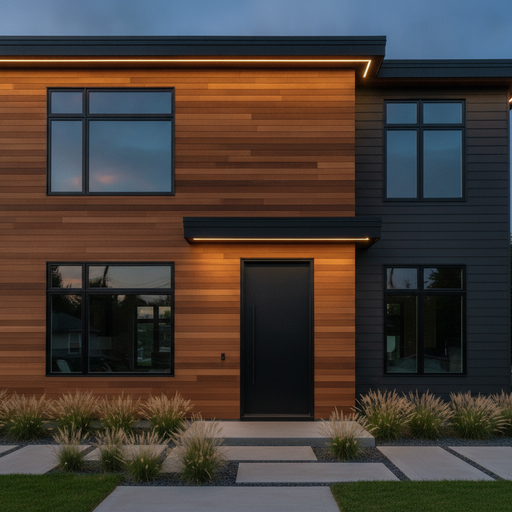
One of the most popular modern trends is the “dark mode” exterior. Utilizing charcoal greys, deep navies, or even matte blacks can make a home look incredibly expensive and architecturally significant. When you pair a dark body color with natural wood accents—like a cedar-clad entryway or a mahogany garage door—the warmth of the wood pops against the dark background, creating a visual balance that is both edgy and inviting.
If dark colors feel too daring, consider the “Modern Farmhouse” or “Scandi-Chic” approach: a bright, cool white paired with black window frames. This high-contrast look is timeless, clean, and provides a perfect backdrop for lush green landscaping.
The Front Door: Your Architectural Signature
If the house is a face, the front door is undoubtedly the smile. In modern design, the front door serves as a focal point. If your current door has ornate glass inserts and dated brass hardware, it’s likely holding your home back from its full potential.
Modern exterior solutions often involve “Pivot Doors”—oversized doors that rotate on a spindle rather than swinging on hinges. They feel grand and substantial. However, if a pivot door isn’t in the budget, a simple flat-panel door with a vertical glass lite can do wonders. Look for materials like frosted glass, steel, or natural white oak. A bold pop of color, like a deep ochre or a sage green, can also add personality without sacrificing the modern feel.
Lighting as an Architectural Element
Most people think of outdoor lighting as a purely functional necessity—something to help you find your keys at night. But in the world of modern curb appeal, lighting is an art form. It’s about “painting” the house with light after the sun goes down.
Instead of a single, lonely porch light, modern homes utilize layers of light. Up-lighting against a textured stone wall or a large tree creates drama and depth. Path lights should be sleek and low-profile, guiding the eye toward the entrance. One of the most effective modern tricks is the use of LED strip lighting under the “lip” of concrete stairs or along the roofline. This creates a floating effect that feels incredibly futuristic and high-end.
Softscaping with Geometric Precision
Landscaping in a modern context is less about the “English Garden” chaos and more about “Architectural Greenery.” Modern landscaping, often referred to as xeriscaping or minimalist landscaping, focuses on form and texture over a wild variety of colors.
To achieve this, think in terms of grids and lines. Instead of a curved flower bed, try rectangular planters or straight-edged steel edging. Ornamental grasses like Mexican Feather Grass or Blue Fescue provide movement and texture while maintaining a clean look. Using a monochromatic plant palette—various shades of green with perhaps one accent color—keeps the visual noise low. Furthermore, replacing a traditional patchy lawn with a combination of oversized concrete pavers and river rock (or pea gravel) creates a low-maintenance, high-style “carpet” for your home.
The Magic of Mixed Materials
What separates a boring box from a modern architectural gem? Texture. Modern design thrives on the juxtaposition of different materials. If your home is currently 100% vinyl siding or 100% brick, it can feel “flat.”
Consider introducing a secondary material to break up the mass of the house. Metal siding (like standing seam panels) installed vertically can add height and an industrial edge. Horizontal wood slatting (Corten steel or Thermory wood) can be used to accent a specific section of the house, such as the area around the front door or a second-story bump-out. Even something as simple as adding a stone veneer to the foundation or a chimney can provide the organic texture needed to ground the more industrial elements of a modern design.
Hardware and the Power of Sans-Serif
If you aren’t ready for a full renovation, look at your “jewelry.” I’m talking about house numbers, mailboxes, and door handles. These small details are often the biggest giveaways of an aging home. Modern curb appeal solutions prioritize “Sans-Serif” fonts—clean, straight lines without the little “feet” on the letters.
Swap out your dated, curvy house numbers for oversized, floating black metal numbers in a font like Helvetica or Neutraface. Replace that old plastic mailbox with a sleek, wall-mounted steel version. Even the doorbell matters; a minimalist smart doorbell integrated into a clean backplate shows that the home is tech-forward and updated. These are the details that professional flippers focus on because they provide a massive return on investment for very little effort.
Windows: The Eyes of the Home
Windows are one of the most expensive upgrades, but they are also the most transformative. Modern windows are characterized by thin frames and large panes of glass. The goal is to “blur the line” between the indoors and the outdoors.
Black window frames have become the gold standard for modern exteriors. They act like a frame for a painting, drawing the eye to the view inside and outside. If replacing windows isn’t an option, many homeowners are finding success in painting their existing vinyl or wood frames black. This simple DIY (using the right multi-surface primer and paint) can completely change the character of a house overnight, giving it a high-contrast, contemporary edge.
Creating a “Destination” Entryway
Finally, modern curb appeal is about the experience of arriving. Instead of a narrow concrete path leading to the door, modern homes often feature a “landing zone.” This might be a widened porch with a couple of iconic “Acapulco” or “Adirondack” chairs, or a small deck made of composite material.
By creating a space where someone *could* sit, you make the home feel more welcoming and lived-in. Even if you never actually sit on your front porch, the visual cue of a chair and a clean, modern planter tells the brain that this is a place of rest and order. It completes the story of the home.
Conclusion: Your Home, Reimagined
Achieving modern curb appeal isn’t about following every trend blindly; it’s about stripping away the uecessary and highlighting the structural beauty of your home. By focusing on a cohesive color palette, investing in quality lighting, and paying attention to the “small” hardware details, you can turn a standard suburban house into a standout piece of architecture.
The journey toward a modern exterior is one of intentionality. Start small—maybe with the house numbers and a new coat of paint on the door. Once you see the transformation, you’ll likely find yourself inspired to tackle the landscaping and the lighting. Before you know it, you’ll be the owner of that “one house” in the neighborhood that everyone stops to admire. Your home deserves to look as good on the outside as the life you’ve built on the inside.