ERP System Modules Explained: Unlocking Business Efficiency and Integration
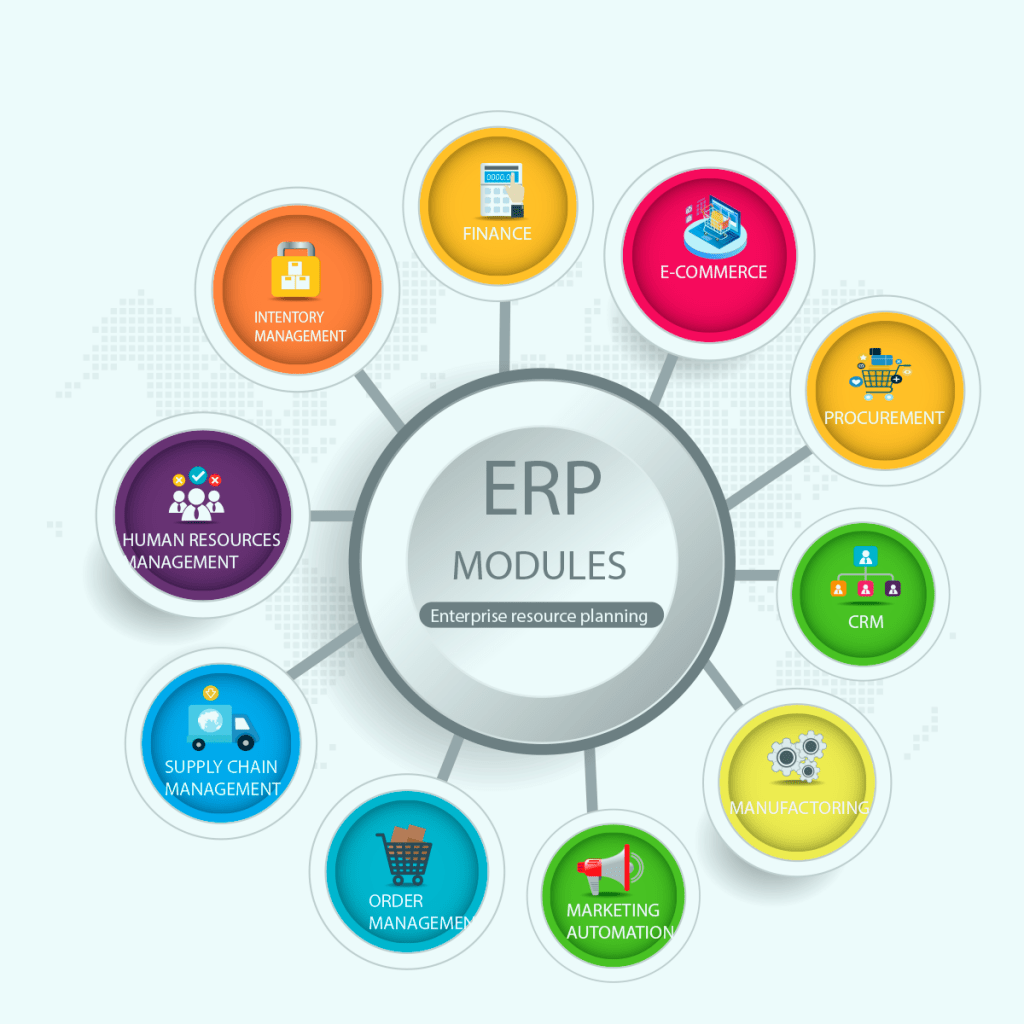
In today’s fast-paced business landscape, organizations constantly seek ways to streamline operations, enhance decision-making, and maintain a competitive edge. Enterprise Resource Planning (ERP) systems have emerged as a cornerstone technology, providing a unified platform to manage and integrate core business processes. Far from being a monolithic application, an ERP system is a sophisticated suite of interconnected modules, each designed to handle specific business functions while sharing a common database.
This modular architecture is the true power behind ERP, allowing businesses to customize their systems to fit their unique needs, scale as they grow, and achieve unprecedented levels of operational efficiency. This article will delve into the essential modules that constitute a typical ERP system, explaining their functionalities, benefits, and how their seamless integration creates a single source of truth for the entire enterprise.
The Foundation: What is an ERP System?
Before diving into the modules, it’s crucial to understand what an ERP system fundamentally is. At its core, ERP is a software solution that integrates all facets of an operation, including product planning, development, manufacturing, sales, marketing, and human resources. It achieves this by providing a centralized database that stores information from various departments, eliminating data silos, reducing redundancy, and ensuring data consistency across the organization. The result is real-time visibility into business operations, enabling more informed and agile decision-making.
The Modular Nature of ERP: Why It Matters
The modular design of an ERP system is its most defining characteristic. Instead of forcing businesses into a one-size-fits-all solution, ERP vendors offer a range of modules that can be selected and configured based on specific industry requirements, company size, and operational complexities. This approach offers several significant advantages:
- Flexibility: Businesses can choose only the modules they need, avoiding unnecessary complexities and costs.
- Scalability: As a company grows or its needs evolve, additional modules can be integrated, or existing ones can be expanded.
- Specialization: Each module is purpose-built to address the intricate demands of a particular business function, ensuring robust capabilities.
- Integration: Despite their specialized functions, all modules are designed to work together seamlessly, sharing data and processes to create a cohesive operational environment.
Let’s explore the key modules that form the backbone of most modern ERP systems.
Core ERP Modules Explained
1. Financial Management Module
The Financial Management module is arguably the most critical component of any ERP system, serving as the central nervous system for all monetary transactions and reporting. It provides a comprehensive view of a company’s financial health, enabling precise control and compliance.
Key Functionalities:
- General Ledger (GL): The heart of financial accounting, it records all financial transactions, maintains chart of accounts, and generates core financial statements like the balance sheet and income statement.
- Accounts Payable (AP): Manages all money owed by the company to its suppliers and vendors, including invoice processing, payment scheduling, and vendor management.
- Accounts Receivable (AR): Handles all money owed to the company by its customers, encompassing invoicing, cash receipts, and credit management.
- Budgeting and Forecasting: Facilitates the creation, management, and monitoring of budgets, allowing for variance analysis and financial planning.
- Asset Management: Tracks fixed assets, including depreciation schedules, maintenance costs, and asset retirement.
- Cash Management: Monitors cash flow, reconciles bank statements, and optimizes liquidity.
- Financial Reporting: Generates a wide array of reports, from statutory reports to custom management reports, offering insights into profitability, liquidity, and operational efficiency.
Benefits: Improved financial accuracy, faster closing cycles, enhanced regulatory compliance, better cash flow management, and strategic financial planning.
2. Human Resources Management (HRM) / Human Capital Management (HCM) Module
The HRM/HCM module manages all aspects related to an organization’s most valuable asset: its people. It automates HR processes, from recruitment to retirement, ensuring compliance and fostering employee engagement.
Key Functionalities:
- Employee Information Management: Centralized database for all employee data, including personal details, contact information, job history, and performance records.
- Payroll Processing: Automates salary calculations, tax deductions, benefits administration, and direct deposits.
- Time and Attendance: Tracks employee work hours, absences, overtime, and leave requests, often integrating with time clock systems.
- Recruitment and Onboarding: Manages the hiring process from job posting and applicant tracking to offer management and new employee onboarding.
- Performance Management: Facilitates goal setting, performance reviews, feedback mechanisms, and career development planning.
- Benefits Administration: Manages employee benefits such as health insurance, retirement plans, and other perks.
- Training and Development: Tracks employee skills, identifies training needs, and manages training programs.
Benefits: Streamlined HR operations, reduced administrative burden, improved employee satisfaction, compliance with labor laws, and better talent management.
3. Supply Chain Management (SCM) Module
The SCM module oversees the entire flow of goods and services, from the initial raw materials to the final product delivery to the consumer. It aims to optimize efficiency, reduce costs, and enhance customer satisfaction throughout the supply chain. This module often comprises several sub-modules:
-
Procurement / Purchasing Module:
- Functionalities: Automates the requisition-to-pay process, including purchase requisition creation, purchase order generation, vendor selection, contract management, and invoice matching.
- Benefits: Cost savings through better vendor negotiation, reduced maverick spending, improved supplier relationships, and streamlined purchasing cycles.
-
Inventory Management Module:
- Functionalities: Tracks inventory levels across multiple locations, manages stock movements, performs cycle counts, optimizes stock levels (reorder points, safety stock), and handles lot/serial number tracking.
- Benefits: Minimized carrying costs, reduced stockouts, improved order fulfillment rates, accurate inventory valuation, and enhanced warehouse efficiency.
-
Order Management / Sales & Distribution (SD) Module:
- Functionalities: Manages the entire sales cycle from order entry and pricing to shipping, billing, and returns. It handles customer master data, sales order processing, delivery scheduling, and invoice generation.
- Benefits: Faster order processing, improved customer service, accurate pricing, optimized delivery schedules, and increased sales revenue.
-
Warehouse Management System (WMS) (often integrated with SCM):
- Functionalities: Optimizes warehouse operations, including receiving, putaway, picking, packing, shipping, and inventory slotting. Utilizes technologies like barcode scanning and RFID.
- Benefits: Increased warehouse throughput, reduced picking errors, optimized space utilization, and faster fulfillment.
-
Logistics Module:
- Functionalities: Manages transportation planning, freight optimization, carrier selection, and shipment tracking.
- Benefits: Reduced transportation costs, improved delivery times, and enhanced visibility into shipment status.
Overall SCM Benefits: Optimized supply chain operations, reduced operational costs, improved delivery performance, enhanced customer satisfaction, and better risk management.
4. Manufacturing Module (MRP/MES)
Designed for companies involved in production, the Manufacturing module helps plan, execute, and control manufacturing processes. It ensures efficient resource utilization and timely production.
Key Functionalities:
- Material Requirements Planning (MRP): Calculates the materials and components needed for production based on sales forecasts and existing inventory, generating purchase and production orders.
- Production Planning: Schedules production orders, allocates resources (machines, labor), and monitors production capacity.
- Bill of Materials (BOM): Defines the complete list of raw materials, components, and sub-assemblies required to manufacture a product.
- Shop Floor Control / Manufacturing Execution System (MES): Monitors and controls production activities on the factory floor in real-time, tracking work orders, machine status, and labor activities.
- Quality Control: Manages quality checks, inspections, and ensures products meet specified standards.
- Costing: Calculates the cost of goods manufactured, including direct materials, direct labor, and overhead.
Benefits: Optimized production schedules, reduced waste and rework, improved product quality, accurate cost tracking, and better capacity utilization.
5. Customer Relationship Management (CRM) Module
While sometimes offered as a standalone system, a CRM module within an ERP provides a unified view of customer interactions across the organization, improving customer satisfaction and driving sales.
Key Functionalities:
- Sales Force Automation: Manages leads, opportunities, sales pipelines, and customer accounts, automating sales tasks.
- Marketing Automation: Plans and executes marketing campaigns, tracks campaign performance, and manages customer segmentation.
- Customer Service and Support: Handles customer inquiries, service requests, case management, and provides a knowledge base for self-service.
- Contact Management: Centralized database for all customer and prospect contact information and interaction history.
Benefits: Enhanced customer satisfaction, improved customer retention, increased sales efficiency, better targeted marketing efforts, and a comprehensive understanding of customer behavior.
6. Project Management Module
For project-centric organizations, this module provides tools to plan, execute, and monitor projects from inception to completion.
Key Functionalities:
- Project Planning and Scheduling: Defines project tasks, milestones, dependencies, and timelines.
- Resource Allocation: Assigns personnel, equipment, and materials to project tasks.
- Cost Tracking and Budgeting: Monitors project expenses against budget, tracks actual vs. planned costs.
- Time Tracking: Records time spent by employees on various project activities.
- Project Billing: Manages billing cycles and invoices clients based on project progress or completion.
- Reporting and Analytics: Provides real-time insights into project status, progress, and performance.
Benefits: Improved project delivery rates, better resource utilization, enhanced budget control, increased project transparency, and accurate project costing.
7. Business Intelligence (BI) and Analytics Module
While not a functional module in the traditional sense, the BI/Analytics component is often integrated into modern ERP systems, providing crucial insights by transforming raw data into actionable intelligence.
Key Functionalities:
- Reporting: Generates standard and custom reports across all modules, providing a snapshot of various business aspects.
- Dashboards: Visualizes key performance indicators (KPIs) and metrics in an intuitive, real-time interface.
- Data Mining: Discovers patterns and trends in large datasets to predict future outcomes.
- Forecasting: Uses historical data and statistical models to predict future sales, demand, and financial performance.
- Ad-hoc Querying: Allows users to create custom queries to extract specific data for analysis.
Benefits: Data-driven decision-making, identification of business opportunities, improved operational efficiency, enhanced strategic planning, and competitive advantage.
The Power of Integration: The ERP Advantage
The true genius of an ERP system lies not just in the individual capabilities of its modules, but in their seamless integration. When these modules communicate and share data effortlessly, several profound advantages emerge:
- Single Source of Truth: All departments access the same, up-to-date information, eliminating discrepancies and ensuring data consistency. A sales order, for instance, instantly updates inventory, production schedules, and financial records.
- Streamlined Processes: Data flows automatically from one module to another, reducing manual data entry, minimizing errors, and accelerating business processes.
- Real-time Visibility: Managers gain real-time insights into every aspect of the business, from inventory levels and sales performance to financial health and production status. This enables proactive decision-making.
- Improved Collaboration: Departments can collaborate more effectively, as they operate from a unified platform with shared data and common goals.
- Enhanced Reporting and Analytics: Integrated data allows for comprehensive cross-functional reporting, providing a holistic view of business performance that is impossible with disparate systems.
- Reduced Operational Costs: By automating tasks, optimizing resource utilization, and minimizing errors, ERP systems significantly reduce operational overhead.
Choosing the Right ERP Modules
Selecting the appropriate ERP modules is a critical decision that should align with a company’s strategic goals and operational needs. Key considerations include:
- Industry Specifics: Different industries have unique requirements (e.g., discrete manufacturing vs. process manufacturing, retail vs. service).
- Business Size and Complexity: Smaller businesses might start with core financial and SCM modules, while larger enterprises require a more comprehensive suite.
- Current Pain Points: Identify existing inefficiencies, data silos, or manual processes that ERP can address.
- Future Growth and Scalability: Choose a system that can accommodate future expansion, new markets, or evolving business models.
- Budget: ERP implementation is a significant investment; align module selection with financial resources.
- Vendor Offerings: Different ERP vendors specialize in certain industries or offer stronger capabilities in specific modules.
Conclusion
ERP systems, with their sophisticated modular architecture, are no longer just an IT tool but a strategic imperative for modern businesses. By integrating critical business functions—from finance and HR to supply chain and manufacturing—ERP provides a unified platform that drives efficiency, fosters collaboration, and delivers unparalleled insights. Each module plays a vital role in this ecosystem, yet their collective power through seamless integration is what truly transforms an organization. Understanding these modules and their interplay is the first step towards harnessing the full potential of an ERP system to achieve sustainable growth and competitive advantage in an ever-evolving global market.