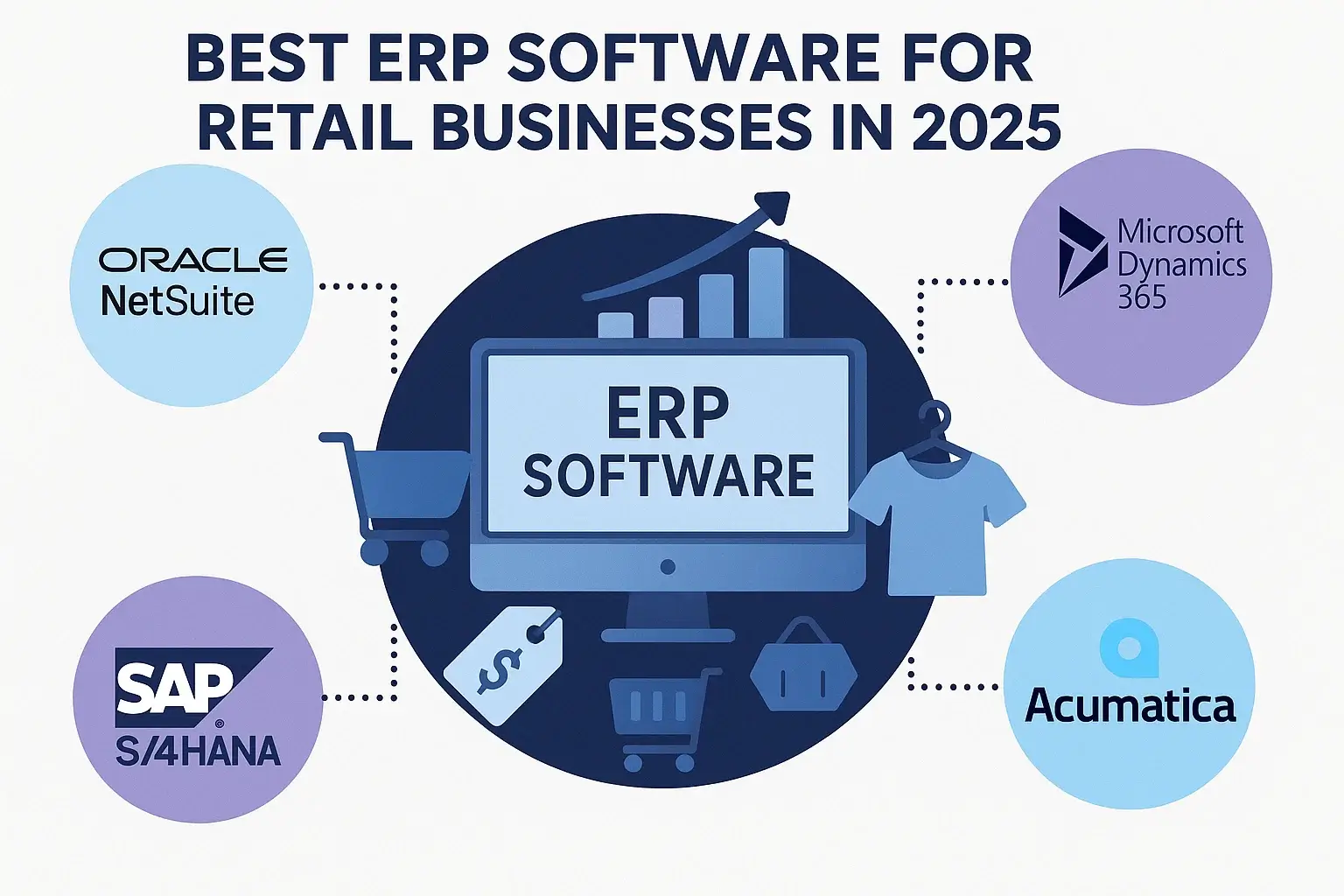
Transforming Retail: The Power of ERP Solutions for Modern Businesses
The retail industry is a dynamic, ever-evolving landscape, characterized by rapid technological advancements, shifting consumer behaviors, and fierce competition. From the rise of e-commerce and the demand for omnichannel experiences to the complexities of global supply chains and personalized customer interactions, retailers today face an array of challenges that demand sophisticated solutions. In this demanding environment, traditional, siloed systems are no longer sufficient. Enter Enterprise Resource Planning (ERP) solutions – a comprehensive, integrated system designed to streamline operations, enhance efficiency, and provide a holistic view of the entire business.
This article delves into the critical role of ERP solutions in transforming the retail sector. We will explore the specific challenges retailers face, define what an ERP system entails, examine the key modules most relevant to retail, outline the tangible benefits it brings, discuss factors in choosing the right solution, and look ahead to the future of ERP in this exciting industry.
The Evolving Retail Landscape and Its Challenges
Before dissecting ERP, it’s crucial to understand the intricate web of challenges that define modern retail:
- Omnichannel Demands: Consumers expect a seamless experience across all touchpoints – physical stores, websites, mobile apps, social media, and marketplaces. Managing inventory, pricing, promotions, and customer service consistently across these channels is a monumental task.
- Inventory Management Complexity: Balancing stock levels to avoid both overstocking (tying up capital, leading to markdowns) and understocking (lost sales, customer dissatisfaction) is a perpetual struggle, especially with diverse product lines and multiple locations.
- Supply Chain Volatility: Global sourcing, fluctuating demand, geopolitical events, and logistics disruptions can wreak havoc on supply chains, impacting delivery times, costs, and product availability.
- Customer Experience (CX) Expectations: Modern consumers demand personalized experiences, fast delivery, easy returns, and responsive customer service. Retailers must gather, analyze, and act on customer data effectively.
- Data Silos and Lack of Real-Time Insights: Many retailers operate with disparate systems for POS, inventory, e-commerce, and accounting, leading to fragmented data, inconsistent reporting, and delayed decision-making.
- Pricing and Promotion Optimization: In a competitive market, setting the right prices and executing effective promotions requires deep insights into costs, competitor pricing, and customer responsiveness.
- Workforce Management: Managing employee schedules, payroll, performance, and training across multiple store locations can be inefficient and time-consuming.
- Digital Transformation Pressure: The need to adopt new technologies, from AI-driven analytics to augmented reality in shopping, adds pressure and requires robust IT infrastructure.
These challenges highlight the need for a central nervous system that can connect all aspects of a retail business, providing visibility, control, and agility. This is precisely where ERP solutions come into play.
What is ERP and Why Retail Needs It?
At its core, an Enterprise Resource Planning (ERP) system is a suite of integrated software applications that manage and automate core business processes across an organization. Instead of having separate systems for finance, inventory, sales, and HR, an ERP system consolidates these functions into a single, unified database and platform.
For retail businesses, this integration is revolutionary. It eliminates data silos, ensures data consistency, and provides a real-time, 360-degree view of operations. When all departments operate on the same data set, decision-making becomes faster, more informed, and more strategic.
Key characteristics of an ERP system relevant to retail:
- Integration: Connects various departments and functions.
- Centralized Database: A single source of truth for all business data.
- Automation: Automates routine tasks, reducing manual effort and errors.
- Real-time Data: Provides up-to-the-minute information for agile responses.
- Modularity: Comprises various modules that can be implemented as needed, allowing for scalability.
- Scalability: Can grow with the business, accommodating new stores, products, and channels.
Key ERP Modules and Their Impact on Retail Operations
A comprehensive ERP system for retail typically includes several critical modules, each designed to optimize specific business functions:
-
Inventory Management:
- Function: Tracks stock levels across all locations (stores, warehouses, in-transit), manages product data, handles returns, and supports inventory replenishment.
- Impact on Retail: Provides real-time visibility into inventory, crucial for omnichannel fulfillment. Enables accurate demand forecasting, minimizing stockouts and overstock. Automates purchase order generation, optimizes warehouse space, and supports efficient cycle counting and physical inventories. Reduces carrying costs and improves cash flow.
-
Supply Chain Management (SCM):
- Function: Manages the flow of goods from suppliers to customers, including procurement, vendor management, logistics, and warehouse operations.
- Impact on Retail: Enhances collaboration with suppliers, streamlines order processing, and optimizes transportation routes. Improves product traceability, ensuring compliance and quality control. Reduces lead times and logistics costs, contributing to better profit margins and customer satisfaction through faster delivery.
-
Customer Relationship Management (CRM):
- Function: Manages customer interactions and data throughout the customer lifecycle, including sales, marketing, and customer service.
- Impact on Retail: Centralizes customer profiles, purchase history, and interaction data. Enables personalized marketing campaigns, targeted promotions, and effective loyalty programs. Empowers sales associates with customer insights to offer tailored recommendations. Improves customer service by providing agents with a complete view of customer interactions and issues, leading to higher satisfaction and retention.
-
Point of Sale (POS) Integration:
- Function: Processes sales transactions, manages cash, and integrates with payment systems, often acting as the front-end interface in physical stores.
- Impact on Retail: Seamlessly integrates sales data with inventory, finance, and CRM modules. Provides real-time sales reporting and insights into popular products and peak hours. Facilitates easy returns and exchanges, improving the customer experience. Supports various payment methods and loyalty program integration at the point of sale.
-
Financial Management (Accounting & Finance):
- Function: Handles all financial transactions, including general ledger, accounts payable, accounts receivable, budgeting, forecasting, and financial reporting.
- Impact on Retail: Provides a unified view of financial performance across all channels and locations. Automates invoicing, payment processing, and bank reconciliations. Ensures compliance with accounting standards and tax regulations. Offers robust budgeting tools and real-time financial reporting for better cash flow management and strategic financial planning.
-
E-commerce and Omnichannel Integration:
- Function: Connects online storefronts with back-end operations, ensuring consistent product information, inventory levels, pricing, and order fulfillment across all sales channels.
- Impact on Retail: Creates a true omnichannel experience where customers can buy online, pick up in-store (BOPIS), return in any location, or have items shipped from the nearest store. Unifies inventory across physical and digital channels, preventing overselling or missed sales. Streamlines order processing, fulfillment, and returns for online sales, improving efficiency and customer satisfaction.
-
Business Intelligence (BI) & Analytics:
- Function: Collects, processes, and analyzes large volumes of data from all modules to provide actionable insights and support data-driven decision-making.
- Impact on Retail: Identifies sales trends, customer purchasing patterns, and operational bottlenecks. Optimizes pricing strategies, marketing campaigns, and product assortments. Provides dashboards and reports for performance monitoring, enabling retailers to react quickly to market changes and uncover new opportunities.
-
Human Resources (HR) / Workforce Management:
- Function: Manages employee data, payroll, benefits, scheduling, time tracking, and performance.
- Impact on Retail: Streamlines employee onboarding and offboarding. Optimizes staff scheduling based on foot traffic and sales forecasts, reducing labor costs while ensuring adequate coverage. Simplifies payroll processing and ensures compliance with labor laws. Improves employee satisfaction through efficient HR processes.
Tangible Benefits of ERP for Retail Businesses
Implementing an ERP solution offers a multitude of benefits that directly address the challenges of the modern retail environment:
- Improved Efficiency and Automation: ERP automates repetitive tasks across departments, from order processing and inventory updates to financial reconciliations. This reduces manual errors, frees up staff for more strategic activities, and significantly speeds up operational workflows.
- Enhanced Customer Experience: With a unified view of customer data, inventory, and order status, retailers can offer highly personalized shopping experiences, consistent service across channels, faster fulfillment, and seamless returns, leading to increased customer loyalty and advocacy.
- Better Decision-Making: Real-time data and robust analytics capabilities provide actionable insights into sales performance, inventory turnover, customer behavior, and financial health. This empowers management to make informed, data-driven decisions quickly and strategically.
- Cost Reduction and Profitability: By optimizing inventory levels, streamlining supply chains, reducing operational inefficiencies, and minimizing waste, ERP helps lower operating costs. Better pricing strategies, targeted promotions, and improved customer retention directly contribute to increased revenue and profitability.
- Scalability and Future-Proofing: A well-implemented ERP system is designed to scale with your business. As you open new stores, expand product lines, or enter new markets, the ERP can seamlessly integrate these changes, providing a flexible foundation for future growth and adaptation to new technologies.
- Reduced Data Silos and Enhanced Collaboration: By breaking down departmental barriers and centralizing data, ERP fosters better communication and collaboration across the organization. Everyone works with the same, accurate information, leading to greater transparency and alignment.
- Regulatory Compliance and Security: ERP systems often include features to ensure compliance with financial regulations, tax laws, and data privacy standards. Centralized data management also enhances data security, protecting sensitive business and customer information.
Choosing the Right ERP Solution for Your Retail Business
Selecting an ERP system is a significant strategic investment that requires careful consideration. Here are key factors to evaluate:
- Industry-Specific Functionality: Look for solutions designed specifically for retail, offering modules like POS integration, omnichannel support, and advanced inventory features tailored to your sector.
- Scalability and Flexibility: Choose a system that can grow with your business, whether you plan to add more stores, expand internationally, or introduce new product categories. It should also be flexible enough to adapt to evolving business processes.
- Cloud vs. On-Premise: Cloud-based ERP (SaaS) offers lower upfront costs, easier maintenance, automatic updates, and remote accessibility. On-premise solutions offer more customization and control but require significant IT infrastructure and expertise. Most modern retailers opt for cloud solutions.
- Integration Capabilities: Ensure the ERP can seamlessly integrate with existing systems (e.g., e-commerce platforms, payment gateways, third-party logistics providers) and future technologies.
- Vendor Reputation and Support: Research the vendor’s track record, industry expertise, customer support, and implementation services. A strong partnership is crucial for successful implementation and ongoing optimization.
- Total Cost of Ownership (TCO): Beyond the initial licensing or subscription fees, consider implementation costs, customization, training, maintenance, and potential future upgrades. Evaluate the potential ROI.
- User Experience (UX): A user-friendly interface is vital for adoption and efficiency. Staff should find the system intuitive and easy to navigate.
- Analytics and Reporting: Assess the system’s business intelligence capabilities. Can it provide the specific reports and dashboards you need to make informed decisions?
Implementation Considerations and Best Practices
Implementing an ERP system is a complex project that requires meticulous planning and execution:
- Clear Objectives and Scope: Define what you want to achieve with the ERP and clearly outline the project’s scope, timeline, and budget.
- Dedicated Project Team: Assemble a cross-functional team with representatives from all key departments (IT, finance, sales, operations, marketing).
- Data Migration Strategy: Plan how existing data will be extracted, cleaned, transformed, and loaded into the new system. This is often the most challenging part of implementation.
- Customization vs. Configuration: While some customization might be necessary, try to stick to standard configurations as much as possible to simplify upgrades and reduce costs.
- Comprehensive Training: Invest heavily in training for all users. A well-trained workforce is essential for maximizing the system’s benefits and ensuring user adoption.
- Change Management: Communicate clearly and frequently with employees about the benefits of the new system and how it will impact their roles. Address concerns and manage expectations to minimize resistance to change.
- Phased Rollout: Consider a phased implementation approach, starting with critical modules or specific locations, before a full enterprise-wide rollout. This allows for learning and adjustments along the way.
- Post-Implementation Support: Ensure there’s a robust support plan in place for troubleshooting, ongoing training, and system optimization after go-live.
The Future of ERP in Retail
The evolution of ERP in retail is closely tied to broader technological trends:
- AI and Machine Learning: AI will increasingly be embedded in ERPs for advanced demand forecasting, personalized product recommendations, automated pricing adjustments, and predictive maintenance for store equipment.
- Internet of Things (IoT): IoT devices (e.g., smart shelves, RFID tags) will feed real-time inventory data directly into ERP systems, enhancing accuracy and visibility, especially for perishable goods or high-value items.
- Blockchain for Supply Chain Transparency: Blockchain technology could be integrated to provide immutable records of product origin, movement, and authenticity, enhancing trust and compliance throughout the supply chain.
- Mobile ERP: Retail managers and staff will increasingly access critical ERP functions via mobile devices, enabling real-time decision-making and operational control from anywhere.
- Hyper-Personalization: Leveraging AI and machine learning, ERPs will empower retailers to deliver unprecedented levels of personalization across all customer touchpoints, from targeted promotions to customized product suggestions.
- Headless Commerce Integration: ERP will serve as the backend data hub for headless commerce architectures, allowing retailers to quickly adapt front-end experiences without disrupting core operations.
Conclusion
In the demanding and rapidly evolving world of retail, an ERP solution is no longer a luxury but a fundamental necessity for sustained growth and competitiveness. By integrating core business processes, centralizing data, and providing real-time insights, ERP empowers retailers to overcome complex challenges, optimize operations, enhance customer experiences, and drive profitability.
The journey to implementing an ERP is significant, but with careful planning, strategic vendor selection, and a commitment to change management, retailers can unlock unparalleled efficiencies and position themselves for success in the digital age. As technology continues to advance, ERP systems will only become more sophisticated, offering even greater capabilities to transform the way retail businesses operate and thrive. Embracing the power of ERP is not just an operational upgrade; it’s a strategic imperative for future-proofing your retail enterprise.