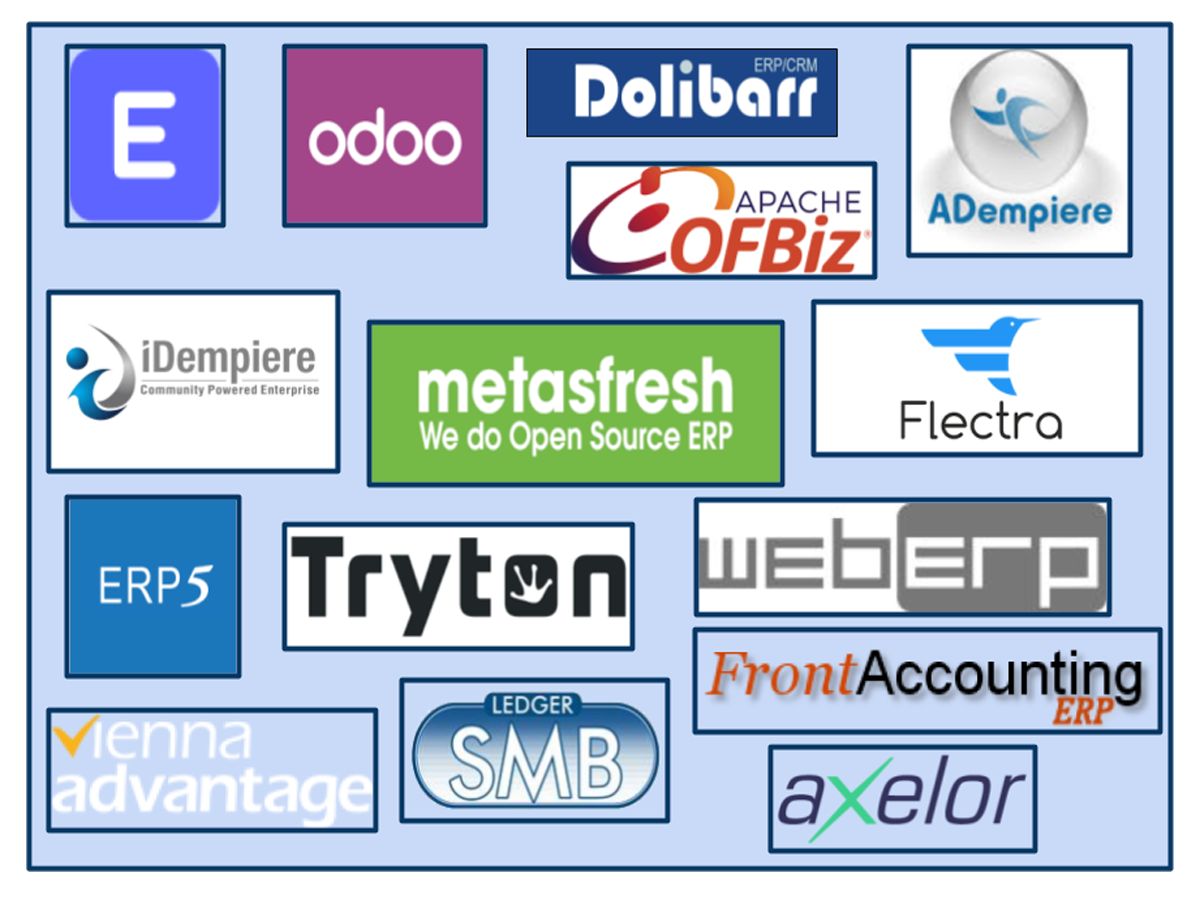
Unlocking Business Potential: A Comprehensive Guide to Open Source ERP Software
In today’s dynamic business landscape, organizations are constantly seeking ways to streamline operations, enhance efficiency, and gain a competitive edge. Enterprise Resource Planning (ERP) systems have emerged as a cornerstone for achieving these goals, integrating various business functions into a unified platform. While proprietary ERP solutions have dominated the market for decades, the rise of open source ERP software has presented a compelling alternative, offering unparalleled flexibility, cost-effectiveness, and community-driven innovation.
This comprehensive guide delves into the world of open source ERP, exploring its benefits, key features to consider, and a detailed list of leading solutions available today. Whether you’re a small startup, a rapidly growing SME, or a large enterprise, understanding the open source ERP landscape is crucial for making informed decisions that can transform your business.
What is ERP and Why is it Essential?
At its core, an ERP system is a suite of integrated applications that an organization can use to manage and automate many back-office functions related to technology, services, and human resources. It typically includes modules for:
- Financial Management: General Ledger, Accounts Payable, Accounts Receivable, Budgeting, Fixed Assets.
- Supply Chain Management (SCM): Inventory Management, Procurement, Order Management, Warehouse Management.
- Manufacturing: Bill of Materials (BOM), Production Planning, Shop Floor Control, Quality Management.
- Customer Relationship Management (CRM): Sales, Marketing Automation, Customer Service, Lead Management.
- Human Resources (HR): Payroll, Time & Attendance, Employee Management, Recruitment.
- Project Management: Task Management, Resource Allocation, Project Costing.
- Business Intelligence (BI) & Reporting: Data Analytics, Dashboards, Custom Reports.
By centralizing data and processes, ERP systems eliminate data silos, improve data accuracy, enhance decision-making, and boost overall operational efficiency.
The Allure of Open Source ERP
While proprietary ERP solutions offer robust features, they often come with high licensing costs, vendor lock-in, and limited customization options. Open source ERP, on the other hand, provides a powerful antidote to these challenges, offering a multitude of benefits:
- Cost-Effectiveness: Perhaps the most immediate appeal is the elimination of upfront licensing fees. While there are still costs associated with implementation, customization, hosting, and support, the absence of recurring software licenses significantly reduces the Total Cost of Ownership (TCO).
- Flexibility and Customization: Open source means access to the source code. This empowers businesses to tailor the software precisely to their unique needs, integrate it seamlessly with existing systems, and develop bespoke functionalities without being constrained by vendor limitations.
- No Vendor Lock-in: With proprietary software, businesses are often tied to a single vendor for support, upgrades, and future development. Open source ERP frees organizations from this dependency, allowing them to choose from a pool of service providers or even manage the system in-house.
- Transparency and Security: The open nature of the source code allows for scrutiny by a global community of developers. This transparency often leads to quicker identification and resolution of bugs and security vulnerabilities, potentially making open source solutions more secure in the long run.
- Community Support and Innovation: Open source projects thrive on vibrant communities. This translates to extensive documentation, active forums, and a continuous stream of innovative features and improvements driven by collective effort.
- Scalability: Many open source ERPs are designed to be highly scalable, capable of supporting businesses from small startups to large enterprises, adapting as the company grows.
Key Features to Look for in an Open Source ERP
Before diving into specific solutions, it’s essential to define your business requirements and identify the core functionalities you need. Here’s a checklist of key features:
- Core Financials: General Ledger, Accounts Payable/Receivable, Multi-currency, Multi-company.
- Inventory & Warehouse Management: Stock tracking, multi-location support, serial/batch numbers.
- Sales & CRM: Order processing, customer database, lead management, quoting.
- Purchasing: Purchase order management, vendor management.
- Manufacturing: BOM, Production Orders, MRP (Material Requirements Planning), shop floor control.
- Human Resources: Employee records, payroll integration, time tracking.
- Project Management: Task assignment, progress tracking, time sheets.
- Reporting & Analytics: Customizable dashboards, business intelligence tools.
- Integration Capabilities: APIs for connecting with other software (e.g., e-commerce, payment gateways).
- User Interface (UI) & User Experience (UX): Intuitive design, ease of use.
- Deployment Options: Cloud-hosted (SaaS), on-premise, hybrid.
Leading Open Source ERP Software Solutions
The open source ERP market is rich with diverse offerings, each catering to different business sizes, industries, and technical expertise levels. Here’s a detailed look at some of the most prominent players:
1. Odoo
- Overview: Odoo (formerly OpenERP) is arguably the most popular and comprehensive open source ERP solution available. It boasts a modular architecture with a vast array of business applications, ranging from core ERP functionalities to website builders and e-commerce. Odoo offers both a community edition (open source) and an enterprise edition (proprietary features, typically SaaS-based).
- Key Features: CRM, Sales, Accounting, Inventory, Manufacturing, Project Management, HR, Marketing, Website Builder, E-commerce, Point of Sale (POS), Field Service, and hundreds of apps in its app store.
- Pros: Extremely feature-rich, modern and intuitive user interface, highly scalable, extensive app ecosystem, strong global community and partner network.
- Cons: The most advanced features and easier hosting/upgrades are often reserved for the Enterprise Edition, which comes with subscription fees. Customization can be complex and requires specialized Odoo developers.
- Ideal For: Growing SMBs to large enterprises seeking an all-in-one, highly integrated solution.
2. ERPNext
- Overview: Built on the Frappe Framework, ERPNext positions itself as a robust yet user-friendly ERP solution for businesses of all sizes. It emphasizes simplicity and a clean user experience while providing a comprehensive set of features.
- Key Features: Accounting, CRM, Sales, Purchasing, Manufacturing, HR & Payroll, Project Management, Inventory, Asset Management, Website, and Help Desk. It also includes specific modules for Education, Healthcare, and Agriculture.
- Pros: Intuitive user interface, comprehensive functionality out-of-the-box, strong focus on usability, active and supportive community, excellent documentation.
- Cons: While feature-rich, some modules might not have the depth of highly specialized solutions. Less market penetration compared to Odoo, which can mean fewer local implementation partners in some regions.
- Ideal For: Small to medium-sized businesses looking for an affordable, integrated, and easy-to-use ERP system that covers most core business functions.
3. Dolibarr ERP & CRM
- Overview: Dolibarr is a lightweight, easy-to-install, and simple-to-use ERP and CRM software designed primarily for small businesses, freelancers, and associations. It focuses on essential business processes without overwhelming users with complex features.
- Key Features: Product and Service Catalog, Customer/Supplier Management, Commercial Proposals, Sales Orders, Invoices, Payments, Stock Management, POS, Bank Account Management, HR (Leave, Expenses), Project Management.
- Pros: Extremely easy to set up and use, low learning curve, active community, modular design allowing users to enable only needed features, good for basic ERP/CRM needs.
- Cons: Less comprehensive than Odoo or ERPNext, especially for complex manufacturing or advanced accounting requirements. Not ideal for large enterprises with intricate processes.
- Ideal For: Micro-businesses, small businesses, freelancers, and associations seeking a straightforward solution for managing daily operations.
4. Tryton
- Overview: Tryton is a high-level, modular, and scalable business solution written in Python and based on a three-tier architecture. It is known for its technical robustness, flexibility, and focus on clean architecture.
- Key Features: Accounting, Sales, Purchasing, Inventory, Manufacturing, Project Management, Analytics. Its modular nature allows for highly customized implementations.
- Pros: Extremely flexible and customizable, technically robust, excellent for businesses with unique or complex requirements, strong adherence to open source principles.
- Cons: Steeper learning curve, requires significant technical expertise for implementation and customization, smaller community compared to Odoo or ERPNext. The user interface is functional but less modern than some alternatives.
- Ideal For: Businesses with specific, complex needs and access to skilled Python developers or technical implementation partners.
5. Metasfresh
- Overview: Metasfresh is a modern open source ERP solution designed for mid-sized businesses, particularly those in manufacturing and wholesale. It is a fork of ADempiere (which itself forked from Compiere) but with a strong emphasis on a modern user interface and enhanced performance.
- Key Features: Sales & CRM, Purchasing, Material Management, Manufacturing (MRP), Production Planning, Financial Accounting, Quality Management, Reporting.
- Pros: Modern and intuitive user interface, strong capabilities for manufacturing and supply chain management, good performance, active development.
- Cons: Less widely known than Odoo or ERPNext, which might mean fewer resources or community support. Requires Java expertise for deeper customization.
- Ideal For: Mid-sized businesses in manufacturing, wholesale, or distribution that need robust SCM and production capabilities with a modern UX.
6. Apache OFBiz
- Overview: Apache OFBiz is a comprehensive suite of enterprise automation software tools. It’s less of an out-of-the-box ERP and more of an enterprise framework that includes a set of business applications covering most ERP functionalities. It is highly flexible and built on Java, XML, and other open standards.
- Key Features: Accounting, CRM, E-commerce, Catalog and Product Management, Manufacturing, Warehouse Management, Order Management, Project Management, and HR.
- Pros: Ultimate flexibility and extensibility due to its framework nature, highly scalable, robust and proven technology stack (Apache project).
- Cons: Very steep learning curve, requires significant development resources and deep technical expertise (Java development) to implement and maintain. Not suitable for businesses looking for a ready-to-use solution.
- Ideal For: Large enterprises with in-house development teams or extensive IT resources that require a highly customized and scalable solution built from the ground up.
7. iDempiere
- Overview: iDempiere is a robust, community-driven open source ERP, CRM, and SCM solution based on the Compiere/ADempiere codebase. It is known for its strong capabilities in manufacturing, distribution, and finance, targeting mid-to-large enterprises.
- Key Features: Multi-company, multi-currency, multi-accounting, Sales, Purchasing, Manufacturing, Warehouse Management, CRM, Financial Accounting, Point of Sale. It also offers advanced reporting and business intelligence.
- Pros: Mature and feature-rich, particularly strong for manufacturing and distribution processes, robust financial management, active community support.
- Cons: The user interface can feel somewhat dated compared to newer solutions like Odoo or Metasfresh. Implementation and customization can be complex, requiring Java expertise.
- Ideal For: Enterprises with complex manufacturing, distribution, or retail operations that need a mature and highly configurable ERP system.
Factors to Consider When Choosing an Open Source ERP
Selecting the right open source ERP is a critical decision. Beyond the features, consider these factors:
- Your Business Needs & Complexity: Map your specific processes and requirements against the capabilities of each ERP. Avoid over-complicating if a simpler solution suffices.
- Total Cost of Ownership (TCO): Remember that "free" software is not "free" to implement, maintain, or customize. Factor in costs for hardware, hosting, implementation services, training, customization, and ongoing support.
- Technical Expertise: Do you have in-house IT staff capable of managing, customizing, or troubleshooting the system, or will you rely on external partners?
- Community & Support: An active community indicates ongoing development, readily available answers to common problems, and a healthy ecosystem of service providers.
- Scalability: Choose a solution that can grow with your business without requiring a complete overhaul in the future.
- User Experience: An intuitive and easy-to-use interface is crucial for user adoption and productivity.
- Integration with Existing Systems: Ensure the ERP can seamlessly connect with your current software stack (e.g., e-commerce platforms, payment gateways, BI tools).
- Deployment Options: Decide whether you prefer cloud-hosted (SaaS), on-premise, or a hybrid deployment model.
Conclusion
Open source ERP software has come of age, offering powerful, flexible, and cost-effective alternatives to proprietary solutions. From the comprehensive suite of Odoo and the user-friendliness of ERPNext to the technical robustness of Tryton and the specialized capabilities of Metasfresh and iDempiere, there’s an open source ERP for nearly every business need.
The journey to selecting the right open source ERP requires careful evaluation, a clear understanding of your organizational requirements, and a realistic assessment of your technical capabilities and budget. By embracing the principles of open source – collaboration, transparency, and innovation – businesses can unlock their full potential and build a resilient, efficient, and future-proof operational backbone. The time to explore the vast possibilities of open source ERP is now.