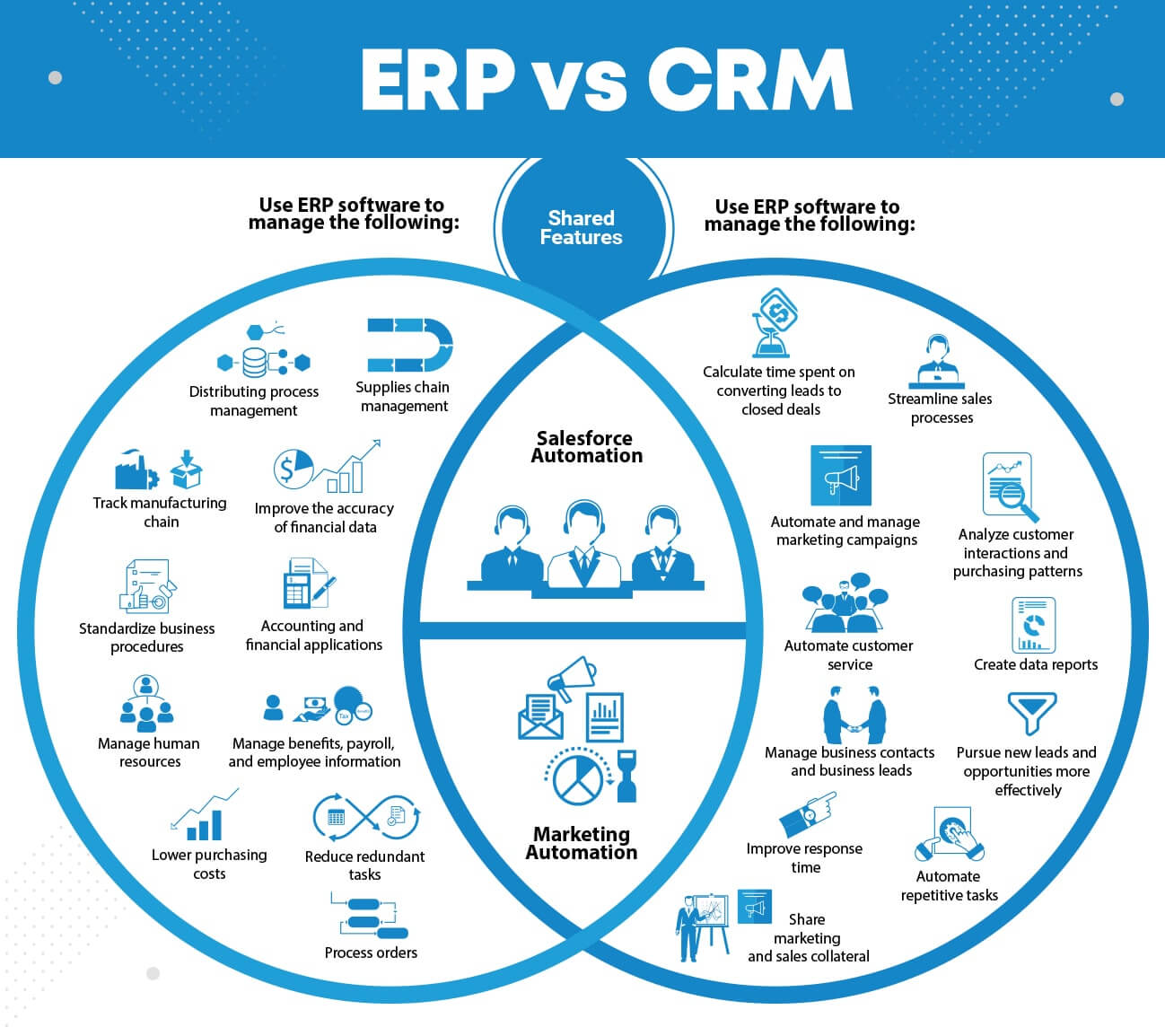
ERP vs. CRM: Understanding the Core Differences for Business Success
In the complex landscape of modern business, technology solutions are not just tools; they are strategic assets that drive efficiency, growth, and customer satisfaction. Among the myriad of software systems available, Enterprise Resource Planning (ERP) and Customer Relationship Management (CRM) stand out as two of the most foundational and impactful. While both aim to streamline business operations and improve overall performance, they serve distinct purposes, focus on different aspects of a company, and cater to varying sets of users.
Often, business leaders and aspiring entrepreneurs encounter confusion regarding these two systems, sometimes even mistakenly believing they are interchangeable or that one supersedes the other entirely. This article aims to demystify ERP and CRM by thoroughly explaining their individual functionalities, core differences, unique benefits, and how they can synergize to create a powerful, integrated business ecosystem.
What is Enterprise Resource Planning (ERP)?
At its heart, Enterprise Resource Planning (ERP) is a comprehensive software system designed to integrate and manage all the core business processes of an organization into a single, unified platform. Think of ERP as the central nervous system of a company, connecting disparate departments and functions, and providing a holistic view of the organization’s operational health.
Core Purpose of ERP:
The primary objective of an ERP system is to optimize internal operations, improve efficiency, reduce costs, and ensure data consistency across the enterprise. It focuses on the back-office functions that keep the business running smoothly, from finance and manufacturing to supply chain management and human resources. By centralizing data and automating processes, ERP eliminates data silos, reduces manual errors, and provides real-time insights for better decision-making.
Key Modules and Functionalities of ERP:
An ERP system is typically composed of various integrated modules, each designed to manage specific business functions. While the specific modules can vary by industry and vendor, common ones include:
- Financial Management: This is often the cornerstone of any ERP system. It handles general ledger, accounts payable, accounts receivable, budgeting, forecasting, asset management, and financial reporting. It provides a real-time snapshot of the company’s financial health, ensuring compliance and aiding strategic financial planning.
- Human Resources (HR) Management: This module manages all aspects of an organization’s workforce, including payroll, recruitment, onboarding, employee data, performance management, time and attendance, benefits administration, and talent management.
- Manufacturing: Crucial for production-based companies, this module supports production planning, scheduling, bill of materials (BOM) management, quality control, shop floor control, and material requirements planning (MRP). It aims to optimize production processes and reduce waste.
- Supply Chain Management (SCM): This module encompasses the entire flow of goods and services, from raw materials to final products. It includes procurement, inventory management, warehousing, logistics, order fulfillment, and supplier relationship management. Its goal is to streamline the supply chain, reduce lead times, and optimize inventory levels.
- Inventory Management: A specialized part of SCM, this module tracks inventory levels, manages stock movements, monitors reorder points, and helps prevent stockouts or overstocking. It’s vital for cost control and ensuring product availability.
- Project Management: This module helps organizations plan, execute, and monitor projects, managing resources, tasks, timelines, and budgets. It’s particularly useful for service-based companies or those with complex, multi-stage projects.
- Procurement: Manages the purchasing of goods and services, from requisition to payment. It helps automate purchase orders, manage vendor relationships, and track spending.
Who Uses ERP?
ERP systems are primarily used by employees across all departments of an organization, including finance, operations, HR, supply chain, manufacturing, and even executives who rely on consolidated data for strategic planning. It is an internal-facing system designed to make the entire organization more efficient.
Benefits of ERP:
- Operational Efficiency: Automates routine tasks, streamlines workflows, and reduces manual effort.
- Cost Reduction: Optimizes resource allocation, minimizes waste, and improves inventory management.
- Data Consistency and Accuracy: Provides a single source of truth, eliminating data duplication and discrepancies.
- Improved Decision-Making: Offers real-time data and comprehensive reports for informed strategic choices.
- Enhanced Collaboration: Breaks down departmental silos by sharing common data and processes.
- Regulatory Compliance: Helps meet industry standards and regulatory requirements through robust financial reporting and audit trails.
What is Customer Relationship Management (CRM)?
Customer Relationship Management (CRM) is a technology solution designed to manage and analyze customer interactions and data throughout the customer lifecycle. Its goal is to improve business relationships with customers, assist in customer retention, and drive sales growth. While ERP focuses inward on internal processes, CRM looks outward, placing the customer at the center of the business strategy.
Core Purpose of CRM:
The fundamental purpose of a CRM system is to foster stronger customer relationships, enhance customer satisfaction, and ultimately increase revenue. It achieves this by centralizing all customer-related information, automating customer-facing processes, and providing tools for sales, marketing, and customer service teams to interact with customers more effectively and personally.
Key Modules and Functionalities of CRM:
CRM systems also come with various modules, each targeting specific aspects of customer interaction:
- Sales Automation: This module helps manage the sales pipeline, track leads, contacts, accounts, and opportunities, automate sales tasks (like email follow-ups), and provide sales forecasting. It empowers sales teams to close deals faster and more efficiently.
- Marketing Automation: This functionality helps businesses automate and streamline marketing campaigns. It includes features for lead generation, lead nurturing, email marketing, social media marketing, campaign management, and marketing analytics to track campaign effectiveness.
- Customer Service and Support: This module focuses on enhancing post-sales customer experience. It typically includes features for case management, ticketing systems, knowledge bases, live chat, call center integration, and customer feedback management. The aim is to resolve customer issues quickly and efficiently, improving loyalty.
- Contact Management: A core component, this module stores all essential customer information, including contact details, communication history, purchase history, preferences, and social media interactions. It provides a 360-degree view of each customer.
- Analytics and Reporting: CRM systems provide robust reporting tools to analyze sales performance, marketing campaign effectiveness, customer service metrics, and overall customer trends. This data helps in identifying opportunities and areas for improvement.
- Workflow Automation: Automates repetitive tasks within sales, marketing, and service processes, such as assigning leads, sending follow-up emails, or escalating service cases.
Who Uses CRM?
CRM systems are primarily used by customer-facing departments: sales teams, marketing teams, and customer service representatives. Executives also leverage CRM data to understand customer behavior, market trends, and make strategic decisions related to customer acquisition and retention.
Benefits of CRM:
- Increased Sales and Revenue: Streamlines the sales process, identifies opportunities, and improves conversion rates.
- Enhanced Customer Satisfaction: Provides personalized interactions, faster issue resolution, and proactive support.
- Improved Customer Retention: By understanding customer needs and preferences, businesses can build stronger, lasting relationships.
- Better Marketing Campaigns: Allows for targeted marketing efforts based on customer data and segmentation.
- Efficient Customer Service: Automates support processes, providing quicker and more consistent service.
- Valuable Customer Insights: Gathers and analyzes customer data to inform product development, service improvements, and business strategy.
The Fundamental Differences: ERP vs. CRM
While both ERP and CRM are critical for business success and deal with data, their core focus, scope, and objectives are distinct. Here’s a breakdown of their fundamental differences:
| Feature | Enterprise Resource Planning (ERP) | Customer Relationship Management (CRM) |
|---|---|---|
| Primary Focus | Internal business processes and operational efficiency. | External customer interactions and relationship management. |
| Main Goal | Cost reduction, operational optimization, resource management, data centralization. | Revenue growth, customer satisfaction, retention, and loyalty. |
| Scope | Broad, holistic view of the entire organization’s operations. | Specific to customer-facing activities (sales, marketing, service). |
| Key Users | Finance, HR, Operations, Manufacturing, Supply Chain, Executives. | Sales, Marketing, Customer Service, Executives. |
| Data Managed | Financials, inventory, production, HR, supply chain, procurement. | Customer contact info, communication history, leads, opportunities, service cases. |
| Direction | Back-office, internal operations. | Front-office, customer-facing. |
| Impact | Improves efficiency and profitability through internal optimization. | Boosts revenue and customer loyalty through external engagement. |
| Typical ROI | Reduced operational costs, improved resource utilization. | Increased sales, higher customer retention, improved customer lifetime value. |
Let’s elaborate on these distinctions:
-
Focus: ERP is all about the back office – the internal workings of a company. It’s concerned with how goods are produced, how money is managed, how employees are paid, and how products are delivered. CRM, on the other hand, is about the front office – how a company interacts with its customers. It’s concerned with attracting leads, closing sales, and providing support.
-
Main Goal: An ERP system’s ultimate goal is to make the business run more efficiently and cost-effectively. It aims to streamline processes, reduce waste, and provide a comprehensive internal view. A CRM system’s primary goal is to improve customer relationships, which directly translates to increased sales, better customer retention, and enhanced customer satisfaction.
-
Scope: ERP has a much broader scope, encompassing almost every internal function of a business. It provides an integrated view of resources across the entire enterprise. CRM has a narrower, more specialized scope, focusing exclusively on the customer and all interactions related to them.
-
Key Users: ERP users are diverse, ranging from accountants and production managers to HR personnel and warehouse staff. CRM users are primarily those whose roles involve direct or indirect interaction with customers: sales representatives, marketing specialists, and customer support agents.
-
Data Managed: The data managed by an ERP system includes financial transactions, inventory levels, production schedules, employee records, and supply chain logistics. CRM data focuses on customer-centric information: contact details, communication history, purchase history, service requests, sales opportunities, and marketing campaign responses.
-
Direction: ERP is internally driven, optimizing processes within the organization. CRM is externally driven, focused on how the organization engages with its market and customers.
-
Impact: ERP impacts the entire operational efficiency and financial health of the business. CRM impacts the customer experience, sales performance, and brand reputation.
Where They Overlap and Integrate: The Power of Synergy
Despite their distinct roles, ERP and CRM are not mutually exclusive. In fact, for many modern businesses, integrating these two systems is a strategic move that unlocks significant value, creating a more cohesive and powerful business ecosystem.
When ERP and CRM systems are integrated, they allow for a seamless flow of information between front-office and back-office functions. For example:
- Sales Orders: A sales representative uses CRM to close a deal. Upon confirmation, the order details (customer information, product, quantity, pricing) are automatically pushed to the ERP system. The ERP then takes over for order fulfillment, inventory management, invoicing, and shipping. This eliminates manual data entry, reduces errors, and speeds up the order-to-cash cycle.
- Customer Service: When a customer calls support with an issue, the CRM provides the service agent with their entire interaction history. If the issue relates to an order or payment, the integrated ERP can provide real-time status updates on inventory, shipping, or financial accounts, allowing the agent to provide accurate and immediate answers.
- Financial Visibility: Sales data from CRM can feed into ERP’s financial module for accurate revenue forecasting and budgeting. Conversely, payment history and credit limits from ERP can be visible in CRM, informing sales and marketing efforts.
- Marketing Campaigns: Customer purchase history and product preferences (often residing in ERP data) can be leveraged by CRM’s marketing automation tools to create highly targeted and personalized campaigns.
- Inventory Management: Sales forecasts from CRM can help ERP’s supply chain and manufacturing modules plan production and inventory levels more effectively, ensuring products are available when customers want them.
Benefits of Integration:
- 360-Degree View of the Customer: Provides a comprehensive understanding of each customer, encompassing their interactions, purchase history, financial status, and service requests.
- Improved Efficiency: Eliminates redundant data entry and manual handoffs between departments, streamlining processes.
- Enhanced Customer Experience: Faster order fulfillment, more informed customer service, and personalized interactions.
- Better Decision-Making: Access to integrated data allows for more accurate sales forecasting, inventory planning, and financial analysis.
- Increased Productivity: Sales, marketing, and service teams have all the information they need at their fingertips, leading to more productive work.
- Reduced Costs: Minimizes errors, optimizes resource utilization, and prevents stockouts or overstocking.
Choosing the Right System (or Systems) for Your Business
The decision to implement an ERP, a CRM, or both, depends heavily on a company’s specific needs, size, industry, current challenges, and strategic goals.
-
When to Prioritize ERP:
- Your internal operations are inefficient, fragmented, or prone to errors.
- You struggle with managing inventory, supply chain, or manufacturing processes.
- You lack a unified view of your financial health.
- You have multiple disparate systems for different back-office functions.
- You are growing rapidly and need scalable infrastructure for core operations.
-
When to Prioritize CRM:
- Your sales pipeline is disorganized, or sales teams lack effective tools.
- You have poor customer retention rates or low customer satisfaction.
- Your marketing efforts are untargeted or yield low ROI.
- You lack insights into customer behavior and preferences.
- You need to improve communication and relationships with your customer base.
For many established businesses, the ultimate goal is to have both. Often, companies start with one system to address their most pressing pain points and then gradually expand or integrate the other as they grow and their needs evolve. A smaller business might start with a standalone CRM to boost sales, while a manufacturing company might first invest in ERP to optimize production.
Conclusion
ERP and CRM are two powerful, yet distinct, pillars of modern business technology. ERP focuses on optimizing the internal machinery of an organization, ensuring efficiency, cost control, and a single source of operational truth. CRM, conversely, focuses on the external face of the business, building and nurturing customer relationships to drive sales and foster loyalty.
Understanding their individual strengths and purposes is crucial for making informed technology investments. While they serve different functions, their combined power through strategic integration can create a synergistic effect, providing businesses with an unparalleled holistic view of their operations and their customers. By leveraging both ERP and CRM effectively, companies can achieve not only operational excellence but also superior customer engagement, ultimately paving the way for sustainable growth and long-term success in an increasingly competitive marketplace.