Transform Your Coastal Ranch Home: 10 Inspiring Landscaping Concepts for Seaside Serenity

Imagine waking up to the gentle sound of distant waves and the salty tang of the ocean breeze drifting through your window. You step outside onto your patio, coffee in hand, and instead of a chaotic garden or a high-maintenance lawn, you are greeted by an oasis of swaying grasses, weathered wood, and soft, sandy textures. This is the magic of a well-executed coastal ranch landscape. The ranch-style home, with its iconic low profile and sprawling footprint, is the perfect canvas for a seaside aesthetic that celebrates simplicity, relaxation, and the raw beauty of nature.
SUBMIT YOUR DETAILS FOR
Designing a landscape for a coastal ranch home isn’t just about planting a few palm trees and calling it a day. It’s about storytelling—creating a narrative that coects your indoor living space with the vast horizon of the coast. Whether you live right on the dunes or just want to bring that “permanent vacation” vibe to your suburbaeighborhood, these landscaping concepts will help you turn your property into a sanctuary of coastal charm.
1. The Power of the “Low-Profile” Palette
Because ranch homes are characterized by their horizontal lines and single-story height, your landscaping should work to complement this silhouette rather than hide it. The goal is to create a sense of continuity. Start with a color palette inspired by the beach: sun-bleached driftwood grays, seafoam greens, sandy beiges, and the deep blues of the Atlantic or Pacific.
When selecting plants, think about their mature height. You don’t want tall, imposing hedges that cut off the view or make the house look tiny. Instead, opt for layered plantings that draw the eye across the landscape. Use low-growing shrubs and groundcovers near the foundation, gradually transitioning to mid-sized ornamental grasses that add movement without blocking the architectural lines of your ranch.
2. Embracing Native Coastal Flora
One of the biggest mistakes homeowners make is trying to force a lush, English-style garden into a coastal environment. Salt spray, sandy soil, and intense sun can be brutal. The secret to a thriving coastal ranch garden is working with nature, not against it. Native plants are your best friends here; they have spent centuries evolving to survive the harsh seaside conditions.
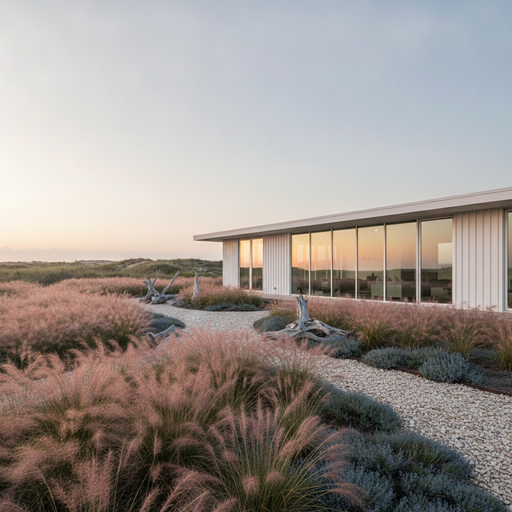
Consider incorporating species like Sea Kale, Blue Fescue, or Seaside Goldenrod. These plants aren’t just hardy; they offer incredible textures that mimic the natural dunes. Ornamental grasses, such as Muhly grass with its pink airy plumes or Switchgrass, provide that essential “whispering” sound whenever the wind blows—a sensory experience that is quintessential to coastal living.
3. Hardscaping with Weathered Elements
In a coastal ranch setting, your hardscaping materials should look like they’ve been there for decades, shaped by the sun and sea. Avoid shiny, polished stones or dark bricks that can feel too formal. Instead, look for materials that age gracefully.
Natural flagstone in sandy hues, decomposed granite paths, and weathered cedar decking are perfect choices. If you’re building a walkway, consider using “steppers” set into a bed of pea gravel or crushed shells. This not only provides excellent drainage—essential for coastal areas prone to heavy rain—but also gives that satisfying “crunch” underfoot that feels like walking down a path to the beach.
4. Seamless Indoor-Outdoor Transitions
The ranch house was originally designed for easy access to the outdoors. To maximize this, your landscaping should feel like an extension of your living room. Large sliding glass doors should open onto expansive decks or patios that sit at the same level as the interior flooring.
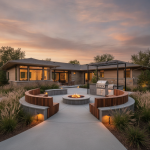
Create “outdoor rooms” by using furniture and plants to define spaces. A cozy fire pit area tucked into a corner of the yard, surrounded by soft grasses, becomes an intimate spot for evening gatherings. By using similar colors and materials inside and out, you blur the boundaries of your home, making the entire property feel larger and more cohesive.
5. The Driftwood Aesthetic and Focal Points
Every great story needs a focal point, and in a coastal ranch garden, nature provides the best props. Large pieces of sun-bleached driftwood can serve as natural sculptures. They add an organic, rugged element that contrasts beautifully with soft foliage.
You can also use large ceramic planters in shades of turquoise or navy to add a pop of color. Arrange them in clusters near your entryway to guide guests toward the front door. Another great focal point for a coastal home is a simple, minimalist water feature. The sound of trickling water can mask street noise and add to the tranquility of your private retreat.
6. Privacy Without the Walls
Living in a ranch home often means your windows are closer to street level, which can bring up concerns about privacy. However, a tall wooden fence can sometimes feel “boxed in” and contrary to the open, airy coastal vibe. Instead, use “living fences.”
Tall, airy grasses like Calamagrostis or evergreen shrubs like Wax Myrtle can provide a screen that filters the view while still allowing light and air to pass through. This creates a sense of seclusion without sacrificing the breezy atmosphere. It’s about creating a “secret garden” feel where you can lounge in your backyard without feeling exposed to the world.
7. Coastal Lighting: The Golden Hour Vibe
The beauty of a coastal ranch shouldn’t disappear when the sun goes down. In fact, seaside homes often have the most magical lighting. Avoid harsh, bright floodlights. Instead, opt for low-voltage LED lighting that mimics the soft glow of a sunset.
Use path lights to guide the way along your gravel walkways and “up-lighting” to highlight the architectural features of your home or the interesting shapes of a coastal pine. String lights or “bistro lights” draped over a pergola can create a festive, relaxed ambiance for outdoor dining. The goal is a warm, inviting glow that makes the home feel like a beacon of comfort.
8. Edible Coastal Gardens
Who says a coastal landscape can’t be functional? Many herbs and vegetables thrive in the well-drained, sandy soils often found near the coast. Rosemary, lavender, and thyme love the sun and can handle the saltier air. Not only do they smell incredible, but their silvery foliage fits perfectly with the coastal color palette.
Consider building raised garden beds out of reclaimed wood or Cor-Ten steel (which develops a beautiful rusty patina that fits the coastal vibe). These beds can be used to grow salt-tolerant greens or even just to add height and structure to a flat ranch yard.
9. Managing the Elements: Wind and Salt
A beautiful landscape is only successful if it is sustainable. If your ranch home is directly facing the ocean, wind can be a major factor. Create “windbreaks” using sturdy, salt-tolerant trees like Live Oaks or Japanese Black Pines. These trees can be pruned to maintain a low profile while protecting more delicate plants behind them.
Mulching is also critical. In a coastal environment, traditional wood mulch can sometimes blow away or decompose too quickly. Consider using inorganic mulches like river rocks or crushed oyster shells around the base of your plants. These materials stay in place, reflect light, and add to the seaside aesthetic.
10. The Zen of Minimalism
Ultimately, the most successful coastal ranch landscapes are those that don’t try too hard. The ranch lifestyle is about ease and lack of pretension. Sometimes, a simple expanse of fine-textured grass (like Zoysia or Seashore Paspalum) paired with a few strategically placed boulders and a cluster of grasses is all you need.
Don’t feel the need to fill every square inch of your yard. “Negative space”—the empty areas between plantings—is just as important as the plants themselves. It allows the eye to rest and emphasizes the sense of opeess that makes coastal living so desirable.
Conclusion
Designing the landscaping for a coastal ranch home is an exercise in balance. It’s about finding the sweet spot between the structured lines of the architecture and the wild, untamed beauty of the sea. By choosing native plants, prioritizing horizontal flow, and using materials that reflect the coastal environment, you create more than just a garden—you create a lifestyle.
Your home becomes a place where the transition from work to relaxation happens the moment you pull into the driveway. Whether you’re watching the sunset from your weathered wood deck or listening to the wind rustle through the Muhly grass, your coastal ranch landscape will serve as a constant reminder to slow down, breathe deep, and enjoy the natural beauty surrounding you.