The Art of First Impressions: Creative Custom Exterior Facade Inspirations for Your Dream Home

Imagine you are driving through a quiet neighborhood at dusk. Most houses blend into a blur of beige siding and standard brick. But then, you turn a corner and stop. One house stands out. It isn’t just a building; it is a statement. The way the light hits the textured stone, the warmth of the horizontal wood slats, and the sharp, confident lines of the metal framing create a visual symphony. That, my friend, is the power of a custom exterior facade.
SUBMIT YOUR DETAILS FOR
The facade is more than just the outer skin of your home. It is the “handshake” your house gives to the world. It tells a story about who lives inside, their style, their values, and their creativity. Whether you are building from scratch or plaing a massive renovation, choosing the right exterior design is one of the most significant decisions you will ever make. In this guide, we will explore various custom facade inspirations that go beyond the ordinary, helping you turn your house into a masterpiece.
The Rise of Modern Minimalism: Finding Beauty in Simplicity
In recent years, the “less is more” philosophy has dominated the world of architectural design. A modern minimalist facade focuses on clean lines, a restricted color palette, and high-quality materials that speak for themselves without the need for excessive ornamentation.
When you look at a minimalist home, you notice the lack of clutter. Often, these designs use large, smooth surfaces made of white stucco or architectural concrete. To prevent the design from feeling “cold,” designers often introduce a single contrasting element. For example, a recessed entrance lined with warm cedar wood provides a focal point that draws the eye and feels welcoming. The beauty of minimalism lies in its precision; every window placement and every joint must be perfect because there is nothing to hide behind.
The Monochromatic Look
One of the trendiest ways to execute a custom minimalist facade is the monochromatic approach. Imagine a house entirely in shades of charcoal gray or matte black. While it sounds bold, the result is incredibly sophisticated. By using different textures—such as matte metal panels paired with dark basalt stone—you create depth and shadow that change throughout the day as the sun moves across the sky.
Biophilic Design: Integrating Nature into the Facade
For those who feel a deep coection to the environment, biophilic design is the ultimate inspiration. This style aims to blur the lines between the built environment and the natural world. Instead of a facade that sits “on top” of the land, a biophilic facade feels like it grew out of it.
One way to achieve this is through the use of “living walls” or vertical gardens. Incorporating built-in planters into the structure of the facade allows greenery to become a literal part of the architecture. Beyond aesthetics, this provides natural insulation and improves air quality. Another popular method is using natural, untreated materials like stacked slate or reclaimed timber that will age gracefully over time, developing a unique patina that reflects the local climate.
- Large Glass Expanses: Using floor-to-ceiling windows doesn’t just let light in; it makes the reflection of the surrounding trees and sky a part of the house’s exterior design.
- Natural Color Palettes: Think sage greens, terracotta oranges, and sandy beiges that harmonize with the landscape.
- Water Features: Some high-end custom facades incorporate a waterfall or a reflection pool that runs right up to the foundation, creating a serene and luxurious atmosphere.
The Industrial Edge: Raw, Bold, and Honest
If you prefer a look that feels more “urban” or “loft-inspired,” the industrial facade is a fantastic choice. This style celebrates the “bones” of the building. It’s a design language that says, “I am strong, functional, and unafraid to be raw.”
To pull off this look, you want to combine materials like exposed red brick, black steel beams, and corrugated metal panels. The key to making an industrial facade work for a residential home is balance. You don’t want it to look like a factory. You can soften the “hardness” of the metal and brick by adding large glass windows or a bright, modern front door. The contrast between the rugged industrial materials and the warmth of interior lighting creates a cozy yet edgy vibe that is very popular in modern city dwellings.
Geometric Play: Breaking the Box
Who says a house has to be a simple cube? One of the most exciting trends in custom facades is the use of dynamic geometry. This involves playing with volumes, overhangs, and cantilevered sections to create a 3D effect.
Imagine a second story that shifts slightly to the left, creating a natural canopy for the driveway below. Or a facade that uses “fins” or louvers—slender vertical slats—to create a sense of movement. These elements don’t just look cool; they are often functional. Overhangs provide shade during hot summers, and louvers can provide privacy while still allowing light and air to flow through. Using geometry allows you to play with light and shadow in a way that makes the house look different at 10:00 AM than it does at 4:00 PM.
Material Mixology: The Secret to Depth
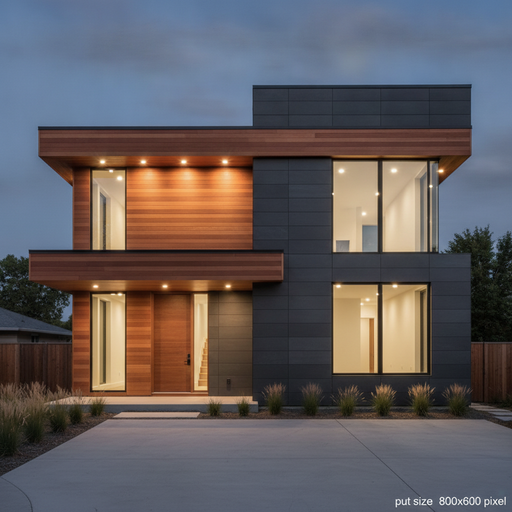
If there is one “secret” that professional architects use to make a facade look expensive, it is material mixing. Using only one material for the entire exterior can sometimes make a house look flat or uninspired. By layering different textures, you create visual interest and “weight.”
Consider a design that uses three primary materials:
- Stone: For the base or ground level to provide a sense of stability.
- Wood: For the middle sections or around windows to add warmth and organic texture.
- Metal or Glass: For the roofline or accent panels to give it a modern, sharp finish.
The trick is to keep the color tones within the same “family” so the house doesn’t look chaotic. If you use a cool-toned gray stone, pair it with a cool-toned wood like ash or a dark metal. If you use a warm-toned brick, look for cedar or copper accents.
The Power of Exterior Lighting
Your facade’s job doesn’t end when the sun goes down. In fact, many custom homes look even more spectacular at night. Exterior lighting is an integral part of the design, not an afterthought.
Instead of just sticking a porch light next to the door, consider “uplighting” textured walls to emphasize their depth. Recessed LED strips can be hidden under rooflines or along walkways to create a futuristic glow. Use “wash lighting” to highlight large expanses of stone or wood. Proper lighting transforms the house into a glowing sculpture, ensuring that your custom investment is appreciated 24 hours a day.
Practicality Meets Style: Durability in Custom Design
While we all want a house that looks like it belongs on the cover of an architectural magazine, we also need a house that lasts. When choosing your custom facade, you must consider your local climate.
If you live in a coastal area, salt air will eat through certain metals, so you might want to opt for high-grade aluminum or treated wood. In areas with heavy rain, ensure your facade design includes proper drainage and moisture barriers behind the cladding. Modern technology has given us incredible materials like Fiber Cement siding, which can mimic the look of wood or stone perfectly but is fire-resistant and incredibly durable. Always ask your architect or builder about the maintenance requirements of the materials you choose.
Conclusion: Crafting Your Own Masterpiece
At the end of the day, your home’s facade is a reflection of your personality. It is the boundary between your private world and the public one. Whether you are drawn to the sleek lines of modern minimalism, the rugged charm of industrial design, or the peaceful harmony of biophilic architecture, the goal is to create something that makes you smile every time you pull into your driveway.
Don’t be afraid to take risks. Mix that stone with that metal. Add that bold geometric pop. Your home is your canvas, and the facade is your most visible work of art. Take these inspirations, talk to a professional, and start building the exterior you’ve always dreamed of. After all, you only get one chance to make a first impression—make sure yours is unforgettable.