The California Dream Reimagined: Proven Solutions for the Housing Affordability Crisis

The Reality of the Golden State Dream
Meet Sarah. Sarah is a registered nurse working in one of Los Angeles’ busiest hospitals. She loves her job, the California sun, and the vibrant culture of her neighborhood. But every month, Sarah faces a familiar dread: her rent check. Despite earning what many would consider a comfortable middle-class salary, Sarah spends nearly 50% of her take-home pay just to keep a roof over her head. She isn’t alone. From the tech hubs of Silicon Valley to the coastal beauty of San Diego, millions of Californians are caught in a relentless squeeze between stagnant inventory and skyrocketing prices.
SUBMIT YOUR DETAILS FOR
For decades, the “California Dream” was defined by a single-family home with a white picket fence and a backyard. Today, that dream feels like a relic of a bygone era. The median home price in California often hovers around double the national average, making homeownership an impossible mountain to climb for young families and essential workers. However, the narrative is shifting. Policymakers, urban plaers, and community advocates are no longer just identifying the problem; they are actively implementing a multi-pronged strategy to fix it. This isn’t just about building more houses; it’s about rethinking how we live, where we build, and who gets to call California home.
Understanding the Supply and Demand Gap
Before we dive into the solutions, we have to understand how we got here. California’s housing crisis is, at its core, a math problem. For thirty years, the state failed to build enough housing to keep pace with its growing population and economic success. Strict zoning laws, environmental regulations that were often weaponized to block development, and the “Not In My Backyard” (NIMBY) sentiment created a perfect storm of scarcity.
When supply stays flat and demand surges, prices explode. To stabilize the market, experts suggest California needs to build millions of new units over the next decade. While that sounds daunting, a wave of new legislative and grassroots solutions is finally begiing to move the needle. Let’s explore the most promising paths forward.
The Rise of the Backyard Revolution: ADUs
One of the most immediate and successful solutions has been the legalization and promotion of Accessory Dwelling Units (ADUs), often called “gray flats” or “casitas.” For years, building a small cottage in your backyard was a bureaucratic nightmare. Recent state laws have stripped away these barriers, forcing local cities to approve ADUs through a streamlined process.
This “gentle density” allows homeowners to become part of the solution. By adding a small unit to an existing lot, we create affordable rental stock without changing the fundamental character of a neighborhood. For a homeowner, it’s a source of rental income that helps pay the mortgage. For a renter, it’s a chance to live in a high-opportunity neighborhood at a lower price point than a traditional apartment complex.
Ending Single-Family Zoning: The Power of SB 9
For almost a century, the vast majority of California’s residential land was zoned exclusively for one house per lot. This practice, while popular in the mid-20th century, is no longer sustainable for a state of 40 million people. Enter Senate Bill 9 (SB 9), a landmark piece of legislation that effectively ended traditional single-family zoning in much of the state.
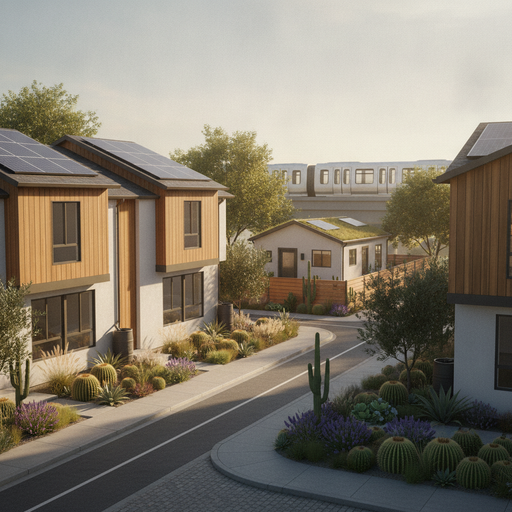
SB 9 allows homeowners to split their lots or build up to four units on a property previously reserved for just one. This isn’t about building massive skyscrapers in the suburbs; it’s about creating “missing middle” housing—duplexes, triplexes, and townhomes. These types of homes are naturally more affordable than sprawling estates and provide a bridge for first-time homebuyers who have been priced out of the market.
Transit-Oriented Development: Living Near the Hub
Imagine waking up, walking five minutes to a train station, and being at your office in 20 minutes without ever touching a steering wheel. This is the vision of Transit-Oriented Development (TOD). By focusing high-density housing near major transit hubs, California can solve two problems at once: the housing shortage and traffic congestion.
New laws, such as SB 10, make it easier for cities to zone for up to 10 units per parcel in transit-rich areas. When people live near where they work or near reliable public transport, the need for massive parking garages—which are incredibly expensive to build—decreases. This reduction in construction costs can be passed down to the resident, making urban living more accessible to the workforce.
Streamlining the Approval Process and CEQA Reform
In many California cities, getting a housing project approved can take years—sometimes even a decade. Every month of delay adds thousands of dollars to the final cost of a home. A major hurdle has been the California Environmental Quality Act (CEQA). While intended to protect the environment, it has frequently been used by opponents to delay or kill sustainable, infill housing projects.
The solution lies in “by-right” housing approvals. This means that if a developer’s plan meets all existing zoning and safety rules, the city must approve it without a lengthy series of public hearings that can be hijacked by NIMBY interests. Recent reforms are exempting certain affordable housing projects from the most grueling parts of the CEQA process, ensuring that “green” housing actually gets built instead of stuck in a courtroom.
Iovation in Construction: Modular and 3D Printing
Traditional “stick-built” construction is slow, weather-dependent, and increasingly expensive due to labor shortages. To lower costs, California is looking toward the future of manufacturing. Modular housing involves building sections of a home in a climate-controlled factory and then transporting them to the site for assembly. This process can cut construction time by 30-50%.
Even more futuristic is the advent of 3D-printed homes. Using massive robotic arms and specialized concrete, companies caow “print” the walls of a small home in less than 48 hours. As these technologies scale, they promise to drastically reduce the baseline cost of creating a new structure, making truly affordable housing a physical reality rather than just a policy goal.
The Role of Social Housing and Community Land Trusts
While market-rate housing is essential, the private market caot solve the crisis for everyone, especially for those at the lowest income levels. This is where “Social Housing” comes in. Inspired by models in cities like Viea and Singapore, social housing involves government-backed or non-profit-managed housing that is shielded from market speculation.
Community Land Trusts (CLTs) are another powerful tool. In a CLT, a non-profit organization owns the land, while the residents own the homes sitting on it. When a resident decides to sell, the price is capped to ensure the home remains affordable for the next low-income buyer. This model treats housing as a stable place to live rather than a speculative investment vehicle, creating long-term stability for vulnerable communities.
Conclusion: A Future for Everyone
The California housing crisis didn’t happen overnight, and it won’t be solved with a single bill or a single new technology. However, for the first time in a generation, there is a clear roadmap forward. By embracing a combination of ADUs, zoning reform, transit-focused density, and iovative construction methods, we can begin to close the supply gap.
The goal isn’t just to lower the numbers on a real estate website. The goal is to ensure that the nurse, the teacher, the firefighter, and the barista can live in the communities they serve. It’s about ensuring that the next generation of Californians can build a life in the Golden State without being crushed by the cost of survival. The dream isn’t dead; it’s just evolving into something more inclusive, more sustainable, and ultimately, more achievable for everyone.