Transforming Your Curb Appeal: The Ultimate Exterior Renovation Cost Checklist for 2024

The Dream of a Fresh Facade
Imagine pulling into your driveway after a long day at work. Instead of seeing faded paint, a cracked walkway, or a roof that has seen better days, you are greeted by a home that looks brand new. The siding is crisp, the windows sparkle, and the landscaping invites you in. This is the power of an exterior renovation. It is not just about aesthetics; it is about protecting your largest investment and increasing its market value.
SUBMIT YOUR DETAILS FOR
However, many homeowners find themselves paralyzed before they even pick up a hammer. Why? Because the “how much” factor is a massive, looming question mark. Exterior renovations can range from a few thousand dollars for a fresh coat of paint to six figures for a complete overhaul. Without a clear checklist, your dream project can quickly turn into a financial nightmare. That is why we have put together this comprehensive exterior renovation cost checklist, told through the lens of a journey to help you navigate the process with confidence.
1. The Protective Shell: Siding and Walls
The siding is your home’s first line of defense against the elements and its most prominent visual feature. When you begin your renovation journey, this is often the most significant line item on your budget. The cost varies wildly depending on the material you choose.
Vinyl Siding
Vinyl remains a popular choice for its affordability and low maintenance. For a standard 2,000-square-foot home, you might expect to spend between $6,000 and $12,000. It is durable and comes in various colors, but it doesn’t always offer the “luxury” feel some homeowners crave.
Fiber Cement (James Hardie)
If you want the look of wood without the rot, fiber cement is the gold standard. It is fire-resistant and incredibly durable. Expect to pay between $10,000 and $20,000. While more expensive than vinyl, the ROI (Return on Investment) is typically much higher.
Stucco and Brick Veneer
For a more Mediterranean or classic look, stucco and brick are top-tier choices. These are labor-intensive, often pushing costs toward the $15,000 to $30,000 range. They offer incredible insulation and a timeless appeal that rarely goes out of style.
2. The Shield Above: Roofing Costs
Nothing kills the excitement of a renovation faster than a leaky roof. Your roof is the most critical structural component of your exterior. If you are plaing a renovation, you must assess the age and health of your shingles.
- Asphalt Shingles: The most common and cost-effective option. A full replacement usually falls between $5,000 and $10,000.
- Metal Roofing: Gaining popularity for its 50-year lifespan. It is an investment, costing anywhere from $15,000 to $30,000.
- Slate or Tile: The ultimate luxury. These roofs can last a century but expect to pay $30,000 or more depending on the complexity of your roofline.
Don’t forget to factor in the cost of gutter replacement. New gutters and downspouts usually add another $1,000 to $3,000 to the roofing bill, but they are essential for directing water away from your new siding and foundation.
3. The Eyes of the Home: Windows and Doors
Think of your windows and doors as the “eyes” of your home. They provide character and, more importantly, energy efficiency. If your current windows are drafty, you are essentially throwing money out of the house every month via your utility bill.
A standard window replacement costs between $500 and $1,200 per window, including installation. If you have 15 windows, that is a $7,500 to $18,000 investment. Upgrading to triple-pane glass or custom frames will push that number higher.
Your front door is the focal point of your curb appeal. A simple steel door can be installed for under $1,000, while a grand, custom wood or fiberglass door with sidelights can easily cost $3,000 to $5,000. It is a small part of the house, but it makes the biggest impact on a guest’s first impression.
4. The Outdoor Living Space: Decks and Patios
The modern homeowner views the “exterior” as more than just walls; it is an extension of the living room. Adding or renovating a deck or patio is where the storytelling of your home’s lifestyle happens. This is where you’ll host summer BBQs and quiet morning coffees.
A basic pressure-treated wood deck costs around $15 to $25 per square foot. However, many are moving toward composite decking (like Trex) because it doesn’t rot or require staining. Composite decks cost more upfront—about $35 to $60 per square foot—but save you thousands in maintenance over time.
If you prefer a patio, concrete is your budget-friendly friend at $6 to $12 per square foot. For a high-end look, natural stone pavers can run $15 to $30 per square foot. When plaing this, always include a budget for outdoor lighting ($500 – $2,000) to ensure the space is usable after the sun goes down.
5. Landscaping and Hardscaping
You could have the most beautiful house on the block, but if it sits on a patch of dead grass, the renovation will feel incomplete. Landscaping is the “makeup” of your home’s exterior.
A basic landscape refresh—new sod, some shrubs, and mulch—usually costs between $2,000 and $5,000. If you are looking for a complete “hardscape” overhaul involving retaining walls, a new driveway, and professional planting plans, you should budget between $10,000 and $25,000.
6. The “Invisible” Costs: Don’t Let These Surprise You
When most people build their checklist, they focus on materials and labor. But there are “ghost” costs that can haunt your budget if you aren’t careful. Every professional renovation story includes a chapter on the unexpected.
- Permits: Depending on your city, permits can cost anywhere from $200 to $1,500.
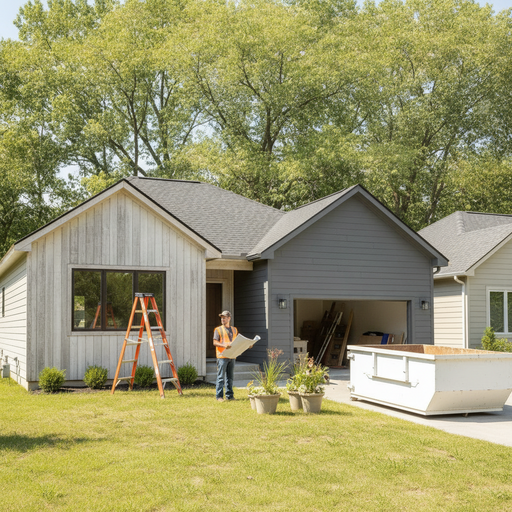
- Waste Removal: Renting a dumpster and paying for landfill fees can add $500 to $1,000 to your total.
- Structural Repairs: Once the old siding or roof comes off, you might find rot or pest damage. Always keep a 10-15% “contingency fund” for these surprises.
- Labor Shortages: Labor currently accounts for about 50% of your total project cost. In high-demand areas, this can fluctuate.
7. How to Prioritize Your Spending
If your “must-have” list is bigger than your bank account, you need to prioritize. Start with the “Envelope.” The envelope consists of the roof, windows, and siding. These are the components that keep the weather out. There is no point in building a $20,000 deck if your roof is leaking into your living room.
Next, focus on high-ROI items. A new front door and garage door have some of the highest returns on investment when it comes time to sell. Finally, move to the purely aesthetic items like high-end landscaping or decorative stone accents.
Conclusion: Your Roadmap to Success
Renovating the exterior of your home is a marathon, not a sprint. By using this checklist, you are no longer walking into the process blind. You know that siding is your biggest visual change, the roof is your protector, and the small details like windows and doors tie everything together.
The key to a stress-free renovation is transparency—both with yourself and your contractor. Take the time to get at least three quotes, check references, and never skip the contingency fund. When the dust settles and the scaffolding comes down, you won’t just have a house that looks better; you’ll have a home that feels like a sanctuary. Ready to start? Grab your measuring tape and begin your transformation today.