Unlocking Insights: A Comprehensive Guide to ERP Reporting and Analytics Tools
In today’s data-driven world, the sheer volume of information generated by businesses can be overwhelming. Enterprise Resource Planning (ERP) systems sit at the heart of this data deluge, acting as the central nervous system for an organization. They meticulously collect, store, and manage critical data across various departments, from finance and human resources to supply chain and manufacturing. However, raw data, no matter how comprehensive, is merely potential. To transform this potential into tangible value, businesses need robust ERP reporting and analytics tools.
These tools are no longer a luxury but a strategic imperative. They bridge the gap between vast datasets and actionable intelligence, enabling organizations to understand past performance, diagnose present issues, predict future trends, and prescribe optimal actions. This article will delve into the critical role, key components, types, benefits, challenges, and the evolving future of ERP reporting and analytics tools, providing a comprehensive guide for businesses aiming to leverage their ERP investments to their fullest potential.
The Foundation: Understanding ERP Data
Before exploring the tools, it’s essential to appreciate the rich data landscape an ERP system offers. An ERP integrates diverse business functions into a single, unified platform, housing a treasure trove of operational and transactional data. This includes:
- Financial Data: General ledger, accounts payable, accounts receivable, budgeting, fixed assets.
- Human Resources Data: Payroll, employee records, benefits, performance management, time tracking.
- Supply Chain Management Data: Inventory levels, procurement, vendor information, logistics, order fulfillment.
- Customer Relationship Management (CRM) Data (if integrated): Customer profiles, sales history, service interactions, marketing campaigns.
- Manufacturing Data: Production schedules, bill of materials, quality control, shop floor activities.
- Project Management Data: Project costs, timelines, resource allocation.
The power of ERP lies in its ability to connect these disparate data points, offering a holistic, single source of truth. However, extracting meaningful patterns and insights from this complex, relational database requires specialized tools beyond basic query functions.
The Evolution of Reporting and Analytics in ERP
The journey of reporting and analytics within the ERP ecosystem has seen significant transformation:
- Early Days (1980s-1990s): Initial ERP systems offered rudimentary, static, pre-defined reports. Customization was limited, often requiring IT intervention and manual data extraction into spreadsheets for any deeper analysis.
- The Rise of Business Intelligence (BI) (2000s): As data volumes grew, dedicated BI platforms emerged. These tools connected to ERPs (and other data sources), extracted data into data warehouses, and offered more flexible reporting, dashboards, and OLAP (Online Analytical Processing) capabilities.
- Modern Era (2010s-Present): The advent of big data, cloud computing, and advanced analytical techniques has revolutionized the landscape. We now see real-time analytics, self-service BI, predictive modeling, machine learning, and embedded analytics becoming standard expectations.
Key Components and Capabilities of ERP Reporting and Analytics Tools
Modern ERP reporting and analytics tools are sophisticated ecosystems designed to transform raw data into strategic assets. They typically encompass several crucial components:
- Data Integration and ETL (Extract, Transform, Load): This is the foundational step. Tools must efficiently connect to the ERP system (and potentially other external data sources), extract relevant data, clean and standardize it (transform), and load it into a data warehouse or data lake optimized for analytical queries. This process ensures data quality and consistency.
- Data Warehousing/Data Lakes: For complex analytics, data is often moved from the transactional ERP database to a dedicated analytical repository. A data warehouse structures data for reporting, while a data lake stores raw, unstructured, or semi-structured data for more advanced and exploratory analysis. These repositories are optimized for query performance, not transactional processing.
- Reporting: This capability focuses on presenting historical and current data in a structured format.
- Standard/Canned Reports: Pre-designed reports for common business needs (e.g., monthly financial statements, sales summaries).
- Ad-hoc Queries: Allows users to build custom reports on the fly by selecting specific fields and filters.
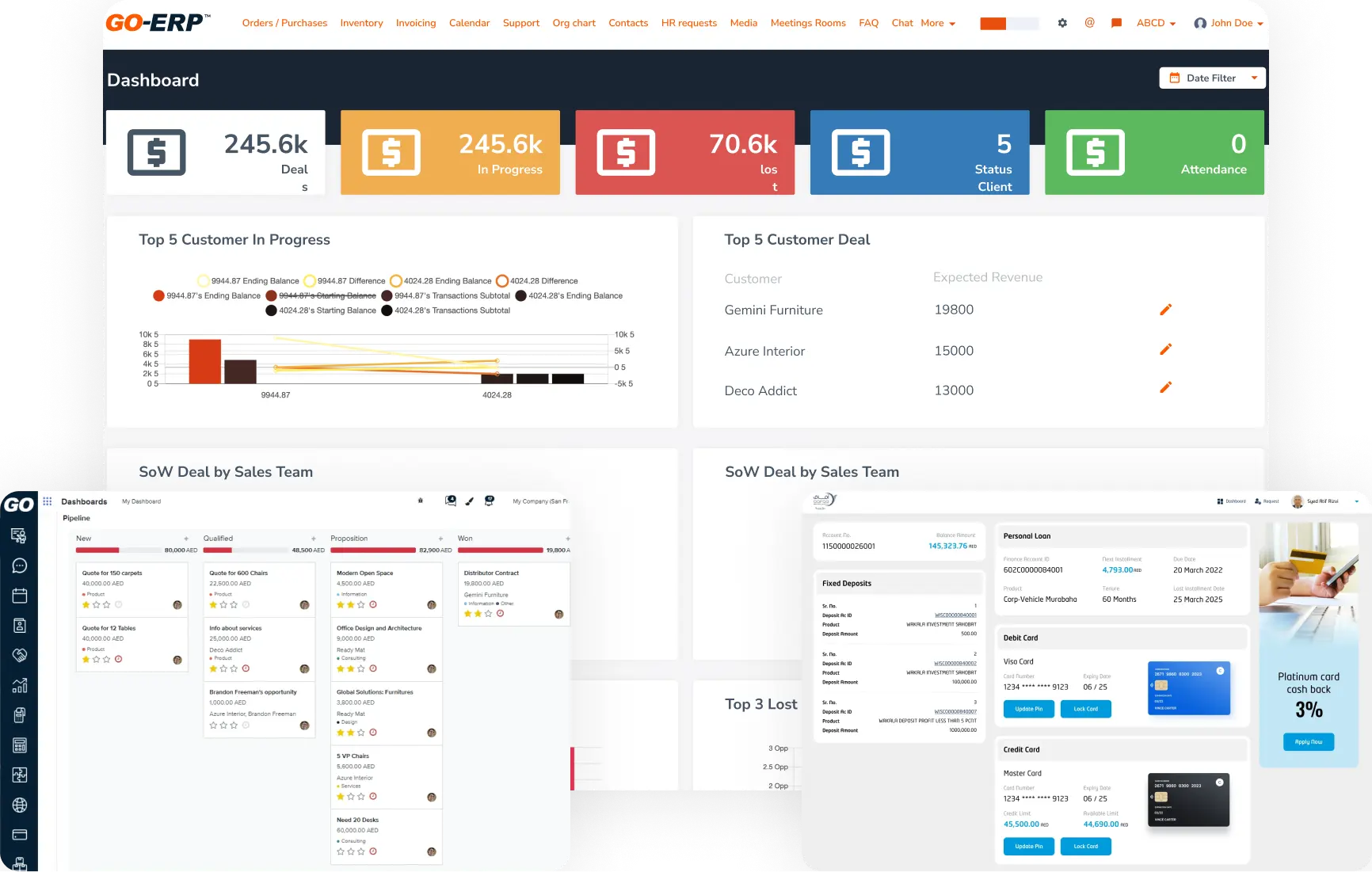
- Interactive Dashboards: Visual interfaces that display key performance indicators (KPIs) and metrics in real-time, often with drill-down capabilities for deeper exploration.
- Alerts and Notifications: Automatically inform users when specific thresholds are met or anomalies are detected.
- Analytics: Beyond just reporting "what happened," analytics delves into "why," "what will happen," and "what should we do."
- Descriptive Analytics: Summarizes past data to understand what has happened (e.g., total sales last quarter).
- Diagnostic Analytics: Explores the root causes of past events (e.g., why sales declined in a specific region).
- Predictive Analytics: Uses historical data and statistical models to forecast future outcomes (e.g., predicting future sales, inventory needs, customer churn).
- Prescriptive Analytics: Recommends specific actions to achieve desired outcomes, often based on predictive models (e.g., suggesting optimal pricing strategies or production schedules).
- Data Visualization: This is crucial for making complex data understandable. Tools offer a wide array of charts, graphs, maps, heatmaps, and scorecards to present insights visually, making patterns and trends easier to spot.
- Self-Service BI: Empowers business users (not just IT or data analysts) to access, analyze, and create their own reports and dashboards without extensive technical knowledge. This democratizes data access and accelerates decision-making.
- Embedded Analytics: Integrates reporting and analytical capabilities directly into the ERP interface. This allows users to access insights within their daily workflows, reducing the need to switch between applications and providing context-sensitive information.
- Mobile Access: Provides secure access to reports and dashboards via mobile devices, enabling decision-makers to stay informed and act on insights from anywhere, anytime.
Types of ERP Reporting and Analytics Tools
The market offers a diverse range of tools, each with its strengths and typical use cases:
- Native ERP Reporting Tools: Most ERP systems (SAP, Oracle, Microsoft Dynamics, NetSuite, Infor, Odoo) come with built-in reporting functionalities. These are excellent for operational reports directly from the ERP’s transactional database, offering real-time data for day-to-day operations. However, they often lack advanced analytical capabilities, cross-module integration for complex analysis, and sophisticated visualization features compared to dedicated BI platforms.
- Standalone Business Intelligence (BI) Platforms: These are specialized tools designed for comprehensive data analysis across multiple sources, including ERPs. They excel in data integration, data warehousing, advanced analytics, and visualization.
- Examples: Microsoft Power BI, Tableau, Qlik Sense, SAP Analytics Cloud, Oracle Business Intelligence, IBM Cognos Analytics.
- Strengths: Powerful visualization, extensive analytical capabilities (descriptive, diagnostic, predictive), ability to integrate data from various sources beyond ERP, self-service features.
- Considerations: Requires separate implementation, data integration can be complex, potential for data latency if not configured for real-time.
- Data Warehousing and ETL Tools: These are the backbone for enterprise-level analytics. While not directly reporting tools, they are essential for preparing data for BI platforms.
- Examples: Informatica, Talend, Apache NiFi, Google BigQuery, Amazon Redshift, Snowflake.
- Strengths: Robust data integration, transformation, and storage capabilities, scalable for large data volumes.
- Considerations: Primarily backend tools, requiring BI platforms for user-facing insights.
- Specialized Analytics Solutions: These focus on specific analytical domains or industries, often incorporating advanced statistical models or machine learning.
- Examples: Tools for financial planning & analysis (FP&A), supply chain optimization, workforce analytics, or industry-specific vertical solutions.
- Strengths: Deep domain expertise, highly optimized algorithms for specific problems.
- Considerations: Niche focus, may require integration with broader BI platforms.
- Cloud-Based Reporting and Analytics: Many of the above tools are now offered as Software-as-a-Service (SaaS) solutions, leveraging cloud infrastructure.
- Examples: All major BI vendors offer cloud versions, dedicated cloud data warehouses (e.g., Snowflake).
- Strengths: Scalability, lower infrastructure costs, easier deployment and maintenance, accessibility.
- Considerations: Data security and compliance in the cloud, internet dependency.
Benefits of Robust ERP Reporting and Analytics
Implementing effective ERP reporting and analytics tools yields a multitude of strategic and operational benefits:
- Enhanced Decision Making: The most significant benefit is the ability to make informed, data-driven decisions rather than relying on intuition or incomplete information. Leaders can quickly access relevant KPIs and trends.
- Improved Operational Efficiency: By identifying bottlenecks, inefficiencies, and areas of waste within processes (e.g., slow inventory turnover, production delays), businesses can optimize operations, streamline workflows, and improve resource utilization.
- Cost Reduction: Analytics can pinpoint areas of unnecessary expenditure, help negotiate better deals with suppliers, optimize inventory levels to reduce holding costs, and identify fraudulent activities, leading to significant cost savings.
- Revenue Growth and Market Opportunities: By analyzing sales data, customer behavior, and market trends, companies can identify new revenue streams, optimize pricing strategies, improve product offerings, and target customer segments more effectively.
- Risk Management and Compliance: Monitoring key financial and operational metrics helps identify potential risks early, such as cash flow problems, compliance breaches, or supply chain disruptions. Tools can also generate audit-ready reports.
- Greater Agility and Responsiveness: In a rapidly changing business environment, the ability to quickly gather insights and adapt strategies is crucial. Real-time analytics enables faster responses to market shifts or emerging threats.
- Better Customer Understanding: Integrating CRM data with ERP transactional data allows for a 360-degree view of the customer, enabling personalized experiences, improved service, and higher customer satisfaction and retention.
- Accountability and Performance Measurement: Dashboards and reports provide clear metrics for individual, team, and departmental performance, fostering a culture of accountability and continuous improvement.
Challenges in Implementing and Utilizing ERP Reporting and Analytics
Despite the undeniable benefits, organizations often face hurdles in fully leveraging these tools:
- Data Quality and Consistency: "Garbage in, garbage out" remains a fundamental truth. Inaccurate, incomplete, or inconsistent data within the ERP system will lead to flawed reports and misleading insights. Data governance and cleansing are critical.
- Data Integration Complexity: Integrating data from a complex ERP system, especially older versions or highly customized instances, with external BI tools or other data sources can be technically challenging and time-consuming.
- Skill Gap: Effectively utilizing advanced analytics requires a workforce with the necessary skills in data analysis, statistical modeling, data visualization, and understanding business context. There’s often a shortage of such talent.
- Cost and ROI Justification: The initial investment in software licenses, infrastructure, implementation, and training for robust analytics solutions can be substantial. Justifying the return on investment (ROI) can be challenging without clear use cases and measurable outcomes.
- User Adoption: Even the most sophisticated tools are useless if employees don’t adopt them. Resistance to change, lack of training, or overly complex interfaces can hinder user adoption.
- Data Security and Governance: Ensuring that sensitive ERP data is secure, compliant with regulations (e.g., GDPR, HIPAA), and accessible only to authorized personnel is paramount. Robust data governance frameworks are essential.
- Performance Issues with Large Datasets: Analyzing massive volumes of ERP data in real-time can strain system resources. Optimizing databases, using in-memory computing, or leveraging cloud scalability are common solutions.
- Defining Clear KPIs and Metrics: Without a clear understanding of what metrics truly matter to the business, reports can become cluttered and unhelpful. Strategic alignment on KPIs is crucial.
The Future of ERP Reporting and Analytics
The landscape of ERP reporting and analytics is continuously evolving, driven by technological advancements and increasing business demands:
- Artificial Intelligence (AI) and Machine Learning (ML): AI and ML are moving beyond predictive analytics into automated insight generation, anomaly detection, and prescriptive recommendations. They will make analytics more proactive and less reliant on manual exploration.
- Natural Language Processing (NLP) and Generative AI: Users will increasingly interact with their data using natural language queries, allowing them to ask questions in plain English and receive instant, insightful answers, democratizing access even further. Generative AI could even design reports and dashboards based on high-level requests.
- Augmented Analytics: This trend leverages AI and ML to automate data preparation, insight discovery, and even data storytelling. Tools will automatically identify patterns, correlations, and outliers, suggesting relevant analyses and visualizations.
- Real-time and Event-Driven Analytics: The demand for immediate insights will push towards more real-time processing, enabling businesses to react instantly to unfolding events (e.g., a sudden spike in customer complaints, a supply chain disruption).
- Embedded and Contextual Analytics: Analytics will become even more seamlessly integrated into everyday business applications and workflows, providing users with relevant insights at the point of decision, without having to leave their primary application.
- Data Storytelling: The focus will shift from merely presenting data to crafting compelling narratives around the insights. Tools will assist in creating more engaging and understandable data stories that resonate with diverse audiences.
- Cloud-Native Solutions: The scalability, flexibility, and cost-effectiveness of cloud platforms will continue to drive the adoption of cloud-native ERP reporting and analytics solutions, offering greater agility and faster innovation cycles.
Conclusion
ERP reporting and analytics tools are indispensable for modern businesses striving for efficiency, growth, and competitive advantage. They transform the vast reservoirs of data within an ERP system from mere records into strategic assets. While challenges related to data quality, integration, and skill gaps persist, the ongoing evolution towards more intelligent, intuitive, and accessible analytics promises to unlock even greater value. Organizations that strategically invest in and effectively utilize these tools will be better positioned to navigate complexity, seize opportunities, and drive sustainable success in the ever-changing global marketplace. The journey from data to wisdom is powered by robust reporting and analytics, making it a continuous strategic imperative for any forward-thinking enterprise.