Okay, here is a comprehensive article about "What is an ERP system and how it works," approximately 1,500 words in length.
Unifying Business: What is an ERP System and How It Works
In the increasingly complex landscape of modern business, organizations constantly strive for efficiency, transparency, and agility. The sheer volume of data, the multitude of departments, and the ever-present need for real-time insights can quickly overwhelm even the most robust operations. This is where Enterprise Resource Planning (ERP) systems emerge as a transformative solution, acting as the central nervous system for an entire enterprise. More than just software, an ERP system is a strategic tool designed to integrate all facets of an operation into a unified, coherent system.
This article will delve deep into the world of ERP, exploring its fundamental definition, tracing its evolution, dissecting its core components, and most importantly, explaining in detail how it functions to empower businesses. We will also examine the myriad benefits it offers, the challenges associated with its implementation, the various types available, and cast a gaze into its exciting future.
What Exactly is an ERP System?
At its core, Enterprise Resource Planning (ERP) is a type of software system that organizations use to manage day-to-day business activities such as accounting, procurement, project management, risk management, compliance, and supply chain operations. A complete ERP suite also includes enterprise performance management, software that helps plan, budget, predict, and report on an organization’s financial results.
The defining characteristic of an ERP system is its integration. Instead of having disparate, standalone systems for each department (e.g., one for finance, another for HR, a third for manufacturing), an ERP system consolidates all these functions into a single, unified database. This centralized database serves as the "single source of truth" for all business data, allowing different departments to access and share information seamlessly and in real-time.
Key characteristics of an ERP system include:
- Integration: Connecting all business functions and departments.
- Centralized Database: A single repository for all enterprise data.
- Real-time Information: Providing up-to-the-minute data for better decision-making.
- Modular Structure: Comprising various modules that cater to specific business functions, which can be deployed together or incrementally.
- Standardized Processes: Enforcing consistent business processes across the organization, often based on industry best practices.
- Automation: Automating many routine tasks, reducing manual effort and errors.
The ultimate goal of an ERP system is to improve operational efficiency, foster collaboration, reduce costs, and provide management with a holistic view of the business, enabling more informed and strategic decisions.
The Evolution of ERP: From MRP to the Cloud
The concept of integrated business management software isn’t new; it has evolved significantly over several decades:
- 1960s – Material Requirements Planning (MRP): Early systems focused primarily on managing inventory and scheduling manufacturing processes. They helped manufacturers plan material purchases based on production forecasts.
- 1980s – Manufacturing Resource Planning (MRP II): MRP systems expanded to include other manufacturing processes like shop floor control, capacity planning, and financial integration related to manufacturing. This marked a significant step towards a broader enterprise view.
- 1990s – Enterprise Resource Planning (ERP): The term "ERP" was coined by Gartner to describe systems that went beyond manufacturing to encompass a wider range of business functions, including human resources, finance, project management, and sales. The client-server architecture was prevalent during this era.
- 2000s – ERP II / Web-enabled ERP: With the rise of the internet, ERP systems began to incorporate web-based access, allowing for greater collaboration with customers, suppliers, and partners (the extended enterprise). Supply Chain Management (SCM) and Customer Relationship Management (CRM) functionalities became more tightly integrated.
- 2010s to Present – Cloud ERP, Mobile ERP, Intelligent ERP: The advent of cloud computing revolutionized ERP, offering Software-as-a-Service (SaaS) models that reduce upfront costs and IT infrastructure requirements. Mobile access became critical, and more recently, ERP systems are integrating advanced technologies like Artificial Intelligence (AI), Machine Learning (ML), and the Internet of Things (IoT) to provide predictive analytics, process automation, and deeper insights.
Key Components and Modules of an ERP System
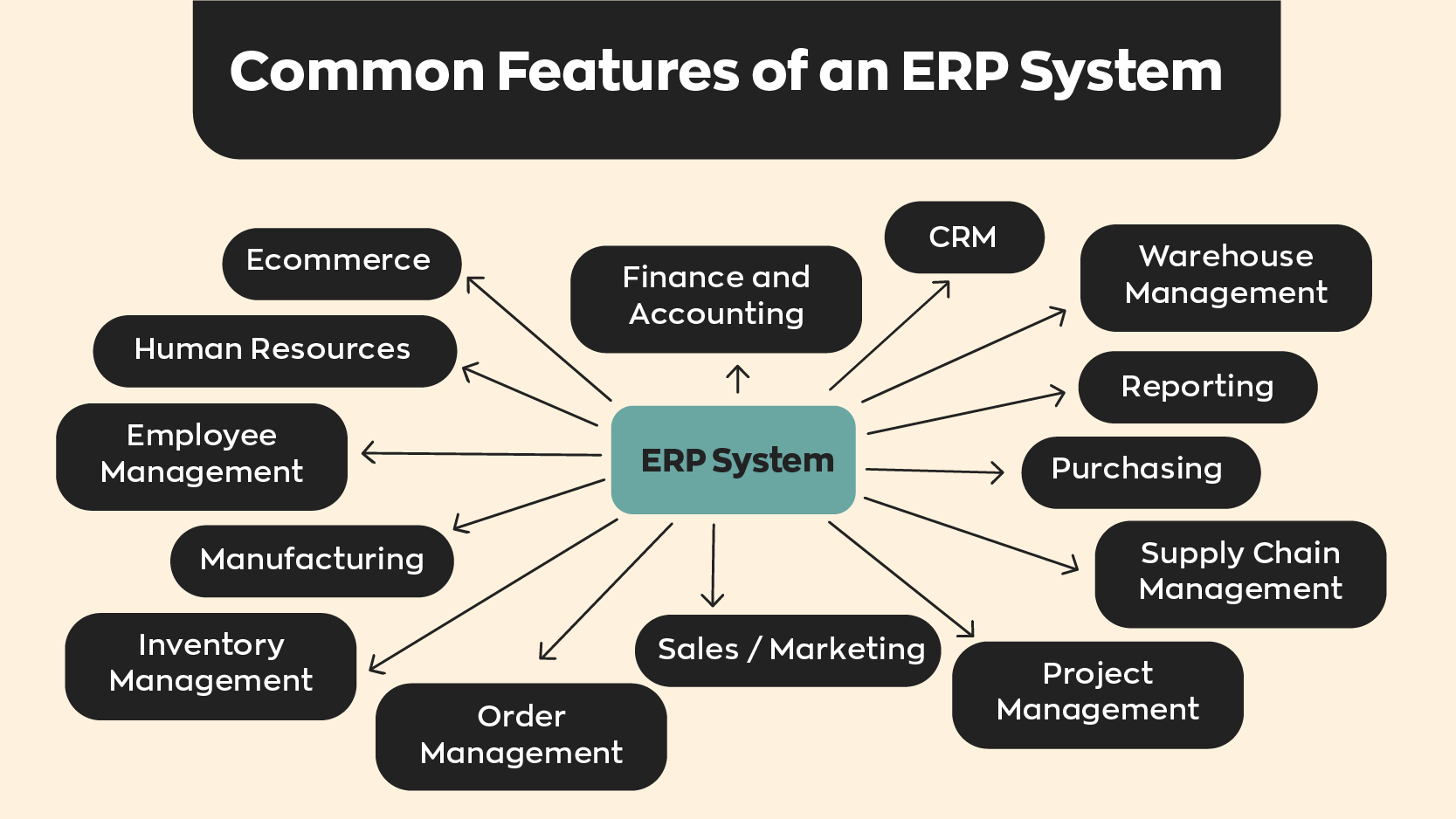
A typical ERP system is composed of various integrated modules, each designed to manage specific business functions. Organizations can select and implement the modules most relevant to their needs.
-
Financial Management: This is often the core of any ERP system. It includes modules for:
- General Ledger (GL): Recording all financial transactions.
- Accounts Payable (AP): Managing vendor invoices and payments.
- Accounts Receivable (AR): Managing customer invoices and collections.
- Budgeting and Forecasting: Planning financial performance and predicting future trends.
- Asset Management: Tracking and managing company assets.
- Cost Accounting: Analyzing and controlling business costs.
- Financial Reporting: Generating financial statements (balance sheets, income statements) and compliance reports.
-
Human Resources (HRM): Manages all aspects of an organization’s workforce:
- Payroll: Processing employee salaries and deductions.
- Recruitment: Managing job applications, interviews, and hiring processes.
- Time and Attendance: Tracking employee work hours.
- Performance Management: Setting goals, conducting reviews, and managing employee development.
- Benefits Administration: Managing employee benefits packages.
- Employee Self-Service: Allowing employees to view payslips, update personal information, and request leave.
-
Supply Chain Management (SCM): Optimizes the flow of goods and materials from raw materials to final product delivery:
- Procurement/Purchasing: Managing vendor relationships, purchase orders, and supplier invoices.
- Inventory Management: Tracking stock levels, managing warehouses, and optimizing inventory costs.
- Warehouse Management: Managing warehouse operations, including receiving, put-away, picking, and shipping.
- Logistics: Planning and executing the transportation of goods.
- Demand Planning: Forecasting customer demand to ensure optimal stock levels.
-
Manufacturing: Crucial for production-oriented businesses:
- Material Requirements Planning (MRP): Planning raw material needs based on production schedules.
- Production Planning: Scheduling and managing manufacturing processes.
- Shop Floor Control: Monitoring and managing activities on the factory floor.
- Quality Control: Ensuring products meet specified quality standards.
- Bill of Materials (BOM): Defining the components required to build a product.
-
Customer Relationship Management (CRM): Manages all interactions with customers and potential customers:
- Sales Automation: Streamlining sales processes, from lead generation to order fulfillment.
- Marketing Automation: Managing campaigns, leads, and customer segmentation.
- Customer Service: Handling customer inquiries, support tickets, and service requests.
- Opportunity Management: Tracking potential sales deals.
-
Project Management: Helps organizations plan, execute, and monitor projects:
- Project Planning: Defining tasks, resources, and timelines.
- Resource Allocation: Assigning personnel and materials to projects.
- Cost Tracking: Monitoring project expenses against budgets.
- Time Tracking: Recording time spent on project activities.
-
Business Intelligence (BI) and Analytics: Provides tools for data analysis, reporting, and visualization to aid decision-making.
-
Sales and Distribution: Manages the entire sales cycle, from order entry to invoicing and shipping.
How an ERP System Works: The Engine of Integration
The true power of an ERP system lies in its operational mechanics – how it integrates data and processes across an organization. Let’s break down the fundamental workings:
-
The Centralized Database: The Single Source of Truth:
At the heart of every ERP system is a single, integrated database. This is the cornerstone. When a piece of information is entered into any module (e.g., a new customer order, an employee’s new address, a raw material delivery), it is stored in this central repository. This eliminates data redundancy, ensures data consistency, and provides a unified view of the business. For example, a customer’s address is stored once and accessible by sales, finance, and shipping. -
Modular Interconnection and Data Flow:
Each ERP module is designed to interact seamlessly with others. When an action occurs in one module, it triggers corresponding updates and actions in other relevant modules.- Example Scenario: A Customer Places an Order
- Sales Module: A sales representative enters a new customer order into the sales module. This data (customer details, product, quantity, price) is immediately saved in the central database.
- Inventory Management Module (SCM): The system checks current inventory levels in real-time. If sufficient stock is available, it reserves the items. If not, it can trigger an alert for replenishment or suggest an alternative.
- Manufacturing Module: If the item needs to be produced, the system automatically creates a production order based on the Bill of Materials (BOM) and production schedules. It allocates necessary raw materials and schedules factory resources.
- Procurement Module (SCM): If raw materials are insufficient for manufacturing, the system can automatically generate a purchase requisition or purchase order for the necessary components.
- Financial Management Module: The order generates an accounts receivable entry for the customer. Once the order is shipped, an invoice is generated, and revenue is recognized. The cost of goods sold is also recorded, and inventory value is updated.
- Shipping/Logistics Module (SCM): The system generates packing slips, shipping labels, and coordinates with logistics providers for delivery.
- Customer Relationship Management (CRM): The customer’s order history is updated, providing a comprehensive view of their interactions with the company, which can be used for future sales or service.
- Example Scenario: A Customer Places an Order
-
Real-time Processing and Reporting:
Because all data resides in a single database and updates occur immediately, ERP systems provide real-time information. Managers can pull up dashboards and reports that reflect the current state of operations, inventory, finances, and customer activity at any given moment. This ability to access up-to-the-minute data is critical for agile decision-making and responding quickly to market changes or operational issues. -
Standardized Processes and Workflow Automation:
ERP systems often embed industry best practices into their workflows. By implementing an ERP, organizations are typically encouraged to standardize their processes, leading to greater consistency, reduced errors, and improved efficiency. Many routine tasks, such as generating invoices, tracking inventory movements, or processing payroll, are automated, freeing up employees to focus on more strategic activities. -
Analytics and Business Intelligence:
With all data centralized, ERP systems are powerful engines for analytics. They can generate comprehensive reports, dashboards, and key performance indicators (KPIs) that offer deep insights into every aspect of the business. This intelligence helps identify trends, predict future outcomes, optimize resource allocation, and uncover areas for improvement, directly contributing to strategic planning and competitive advantage.
Benefits of Implementing an ERP System
The strategic advantages of a well-implemented ERP system are profound and far-reaching:
- Improved Efficiency and Productivity: Automates repetitive tasks, streamlines workflows, and reduces manual data entry, leading to faster operations and higher output.
- Enhanced Data Visibility and Insights: Provides a holistic, real-time view of all business operations, enabling better decision-making and strategic planning.
- Better Collaboration: Breaks down departmental silos by providing a shared platform for information, fostering cross-functional teamwork.
- Cost Savings: Reduces operational costs through optimized processes, better inventory management, reduced waste, and improved resource utilization.
- Streamlined Operations: Standardizes business processes based on best practices, leading to greater consistency and fewer errors.
- Improved Customer Service: With integrated CRM capabilities, sales and service teams have a complete view of customer interactions, leading to faster response times and more personalized service.
- Regulatory Compliance: Helps organizations meet industry regulations and compliance requirements through robust reporting and audit trails.
- Scalability: ERP systems are designed to grow with a company, allowing businesses to add modules or expand functionality as their needs evolve.
- Competitive Advantage: By optimizing operations, improving agility, and providing superior insights, ERP helps businesses stay ahead of the competition.
Challenges and Considerations for ERP Implementation
Despite the numerous benefits, implementing an ERP system is a significant undertaking that comes with its own set of challenges:
- High Cost: ERP systems involve substantial investments in software licenses, hardware, implementation services, customization, and ongoing maintenance and training.
- Complexity and Duration: Implementation projects are often complex, requiring significant planning, resources, and time (often months to years).
- Resistance to Change: Employees may resist new processes and systems, requiring robust change management strategies and comprehensive training.
- Data Migration Issues: Transferring data from old, disparate systems to the new ERP can be a complex and error-prone process.
- Customization vs. Standardization: Over-customizing an ERP system can increase costs, complicate upgrades, and deviate from industry best practices. Balancing unique business needs with standard functionality is crucial.
- Vendor Lock-in: Choosing an ERP vendor can be a long-term commitment, making switching providers difficult and costly.
- Need for Strong Project Management: A dedicated and experienced project management team is essential for successful implementation.
- Training Requirements: Adequate training for all users is vital to ensure adoption and maximize the system’s benefits.
Types of ERP Systems
ERP systems can be categorized based on their deployment model and target audience:
- On-Premise ERP: The software is installed and run on the company’s own servers and infrastructure. This gives companies full control over their data and customization but requires significant upfront investment in hardware, software licenses, and IT staff.
- Cloud ERP (SaaS ERP): The software is hosted and managed by the ERP vendor and accessed over the internet (Software-as-a-Service). This model offers lower upfront costs, faster deployment, automatic updates, and scalability. It’s ideal for businesses looking to reduce IT overhead.
- Hybrid ERP: A blend of on-premise and cloud solutions, allowing companies to keep some critical data or functions on-premise while leveraging the cloud for others.
- Two-Tier ERP: Larger enterprises might use a robust, comprehensive ERP at the corporate level (Tier 1) and lighter, more agile ERP solutions for subsidiaries or specific business units (Tier 2).
- Industry-Specific ERP: Tailored versions of ERP systems designed to meet the unique requirements and regulations of particular industries (e.g., healthcare, retail, manufacturing, construction).
The Future of ERP: Intelligent and Adaptive
The ERP landscape is continuously evolving, driven by technological advancements and changing business demands. The future of ERP promises even greater intelligence, automation, and adaptability:
- AI and Machine Learning Integration: ERP systems will leverage AI for predictive analytics (e.g., forecasting demand, predicting equipment failure), intelligent automation of processes, and personalized user experiences.
- Internet of Things (IoT) Connectivity: Integrating data from IoT devices (sensors on machinery, smart warehouses) directly into ERP will provide real-time operational insights, optimize asset management, and enhance supply chain visibility.
- Blockchain for Transparency: Blockchain technology could enhance supply chain traceability, secure transactions, and ensure data integrity within ERP systems.
- Enhanced Mobile Capabilities: Mobile ERP will move beyond simple data access to full transactional capabilities and intuitive user interfaces, enabling work from anywhere.
- Hyper-personalization and User Experience: ERP interfaces will become more intuitive and personalized, adapting to individual user roles and preferences, making the systems easier to use and more efficient.
- Composability and Modular ERP: The trend towards more flexible, composable ERP architectures will allow businesses to easily plug and play different applications and services, creating highly customized and agile solutions without heavy, monolithic systems.
- Sustainability Features: ERP will increasingly incorporate features to track and manage environmental impact, energy consumption, and compliance with sustainability regulations.
Conclusion
An ERP system is far more than just a piece of software; it is a strategic investment that fundamentally transforms how a business operates. By integrating disparate functions into a single, unified system, it provides a centralized database, fosters real-time data access, and standardizes processes, leading to unparalleled efficiency, transparency, and decision-making capabilities. While the journey of ERP implementation can be complex and challenging, the benefits of improved productivity, cost savings, enhanced customer satisfaction, and a robust competitive advantage make it an indispensable tool for organizations striving for success in the modern global economy. As technology continues to advance, ERP systems will only become more intelligent, integrated, and essential, continuing to serve as the backbone for enterprises worldwide.