Mastering the Digital Realm: How ERP Software Empowers eCommerce Businesses
The digital marketplace is a vibrant, ever-evolving ecosystem. For eCommerce businesses, the promise of global reach and exponential growth comes hand-in-hand with a labyrinth of operational complexities. From managing an ever-expanding inventory across multiple channels to processing thousands of orders daily, ensuring timely fulfillment, and delivering a superior customer experience – the demands are relentless. Without a robust, integrated system to manage these intricate processes, even the most promising online ventures can quickly become overwhelmed by disorganization, inefficiency, and ultimately, missed opportunities.
This is where Enterprise Resource Planning (ERP) software steps in as the strategic backbone for modern eCommerce. Far from being a luxury reserved for large corporations, ERP has become an indispensable tool for eCommerce businesses of all sizes, enabling them to streamline operations, gain unparalleled visibility, enhance customer satisfaction, and scale effectively in a fiercely competitive landscape.
What is ERP Software? A Holistic View
At its core, ERP software is a suite of integrated applications that an organization can use to manage and integrate the critical parts of its business. It serves as a central nervous system, connecting various departments and functions that traditionally operated in silos – such as finance, human resources, manufacturing, supply chain, services, procurement, and more. By consolidating data from these different areas into a single, unified database, ERP provides a holistic, real-time view of business operations.
For a traditional business, this means improved communication, automated workflows, and data-driven decision-making. For an eCommerce business, these benefits are amplified, directly addressing the unique challenges of online retail.
Why eCommerce Businesses Desperately Need ERP
eCommerce operates at a breakneck pace. Customers expect instant gratification, transparent communication, and flawless execution from the moment they click "add to cart" to the package arriving at their doorstep. Manual processes, disparate systems, and fragmented data are not just inefficient; they are fatal flaws in this environment.
Here’s why ERP is not just beneficial, but often critical for eCommerce success:
- Complexity of Operations: An eCommerce business isn’t just a website. It involves product sourcing, inventory management, warehousing, order processing, payment gateways, shipping logistics, customer service, marketing, and financial reporting – all needing to communicate seamlessly.
- Scalability Challenges: As an eCommerce business grows, the volume of orders, products, and customer interactions explodes. Manual systems quickly buckle under pressure, leading to errors, delays, and a degraded customer experience.
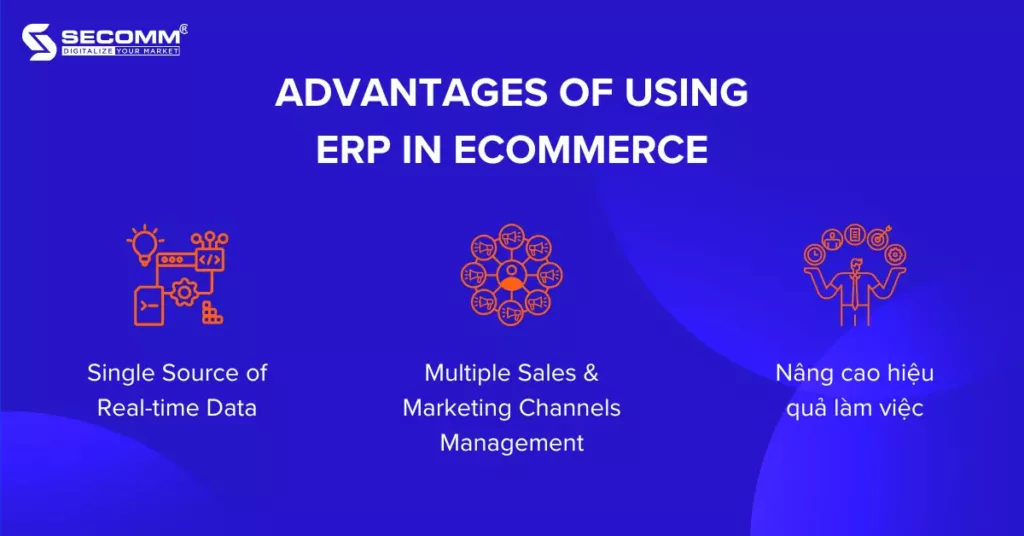
- Real-time Data Demands: Stockouts, incorrect pricing, or delayed shipping updates can severely damage customer trust. eCommerce thrives on real-time accuracy in inventory levels, order status, and customer information.
- Multi-channel Presence: Many eCommerce businesses operate across their own website, marketplaces (Amazon, eBay, etc.), social media, and even brick-and-mortar stores. Managing inventory and orders across these diverse channels without a central system is a logistical nightmare.
- Customer Experience is King: Personalization, efficient returns, proactive communication, and quick resolution of issues are paramount. Fragmented customer data makes delivering this experience incredibly difficult.
Key ERP Modules and Features Essential for eCommerce
A modern ERP system tailored for eCommerce integrates several crucial modules to provide a comprehensive solution:
-
Inventory Management:
- Real-time Tracking: Crucial for preventing overselling or stockouts across all sales channels. ERP provides accurate, up-to-the-minute inventory levels.
- Multi-location/Warehouse Management: Tracks inventory across multiple warehouses, fulfillment centers, or even third-party logistics (3PL) providers.
- Demand Forecasting: Utilizes historical sales data and trends to predict future demand, optimizing purchasing and reducing carrying costs.
- SKU Management: Manages detailed product information, variations (size, color), bundles, and kits.
- Returns Management: Streamlines the process of receiving, inspecting, and re-stocking returned items.
-
Order Management (OMS):
- Automated Order Capture: Integrates directly with eCommerce platforms (Shopify, Magento, WooCommerce) and marketplaces to automatically pull orders.
- Order Processing & Routing: Automates order validation, payment verification, and routes orders to the appropriate warehouse for fulfillment.
- Order Status & Tracking: Provides real-time updates on order status, from placement to shipment, accessible to both staff and customers.
- Fraud Detection: Integrates with payment gateways to flag suspicious transactions.
-
Warehouse Management (WMS):
- Optimized Picking & Packing: Guides warehouse staff through the most efficient picking paths and packing processes.
- Shipping Integration: Connects with major shipping carriers (UPS, FedEx, DHL, USPS) to generate labels, calculate shipping costs, and track packages.
- Receiving & Putaway: Streamlines the process of receiving new inventory and placing it into optimal storage locations.
- Barcode Scanning: Enhances accuracy in all warehouse operations.
-
Financial Management:
- General Ledger (GL): Tracks all financial transactions.
- Accounts Receivable (AR) & Accounts Payable (AP): Manages customer payments and supplier invoices.
- Tax Management: Automates sales tax calculation and reporting for various jurisdictions.
- Bank Reconciliation: Matches transactions between bank statements and company records.
- Reporting & Analytics: Provides detailed financial reports, profit/loss statements, and cash flow analysis specific to eCommerce operations (e.g., cost of goods sold, revenue by channel).
-
Customer Relationship Management (CRM):
- Centralized Customer Data: Stores all customer interactions, purchase history, preferences, and support tickets in one place.
- Personalization: Enables targeted marketing campaigns and personalized customer experiences.
- Customer Service & Support: Facilitates efficient handling of inquiries, complaints, and returns, leading to improved satisfaction.
- Loyalty Programs: Manages customer loyalty points, rewards, and VIP programs.
-
Supply Chain Management (SCM):
- Supplier Management: Manages vendor relationships, purchase orders, and supplier performance.
- Logistics Management: Oversees inbound and outbound shipping, freight, and transportation.
- Procurement: Automates the purchasing process, from requisition to payment.
-
Business Intelligence (BI) & Reporting:
- Customizable Dashboards: Provides at-a-glance insights into key performance indicators (KPIs) like sales trends, inventory turnover, customer acquisition costs, and order fulfillment rates.
- Advanced Analytics: Leverages data to identify trends, predict future outcomes, and inform strategic decisions.
-
Integration Capabilities:
- This is arguably the most critical feature for eCommerce ERP. It must seamlessly integrate with:
- eCommerce Platforms: Shopify, Magento, WooCommerce, BigCommerce, etc.
- Marketplaces: Amazon, eBay, Etsy, etc.
- Payment Gateways: Stripe, PayPal, Square, etc.
- Shipping Carriers: UPS, FedEx, DHL, USPS, local postal services.
- 3PL Providers: For outsourced fulfillment.
- Marketing Automation Tools: Mailchimp, HubSpot, etc.
- This is arguably the most critical feature for eCommerce ERP. It must seamlessly integrate with:
Tangible Benefits of ERP for eCommerce Businesses
Implementing an ERP system transforms an eCommerce business from a collection of disparate processes into a cohesive, optimized operation. The benefits are far-reaching:
-
Improved Efficiency and Automation:
- Automates routine tasks like order processing, inventory updates, and financial reconciliation, freeing up staff for more strategic activities.
- Reduces manual data entry and associated errors, saving time and resources.
-
Enhanced Inventory Accuracy and Optimization:
- Eliminates overselling and stockouts, protecting brand reputation and maximizing sales.
- Optimizes purchasing decisions, reducing carrying costs and preventing dead stock.
- Provides clear visibility into inventory across all channels and locations.
-
Better Order Fulfillment and Logistics:
- Streamlines the entire order-to-delivery process, leading to faster shipping and reduced errors.
- Optimizes warehouse operations, from picking to packing, improving efficiency and reducing labor costs.
- Provides customers with accurate, real-time tracking information, enhancing satisfaction.
-
Superior Customer Experience:
- Centralized customer data enables personalized marketing and responsive customer service.
- Faster, more accurate order fulfillment leads to happier customers and repeat business.
- Efficient returns processing builds trust and loyalty.
-
Data-Driven Decision Making:
- Provides a single source of truth for all business data, eliminating conflicting reports.
- Powerful analytics tools offer deep insights into sales performance, inventory health, customer behavior, and financial trends.
- Enables proactive problem-solving and strategic planning based on accurate information.
-
Scalability and Growth:
- Designed to handle increasing volumes of orders, products, and customers without breaking down.
- Allows businesses to expand into new markets, add new product lines, or open new sales channels with confidence.
- Reduces the need for hiring additional staff purely for administrative tasks as the business grows.
-
Cost Reduction:
- Minimizes operational costs through automation and efficiency gains.
- Reduces waste from excess inventory or damaged goods.
- Lowers administrative overhead and labor costs associated with manual processes.
-
Compliance and Risk Management:
- Helps ensure compliance with financial regulations and tax laws.
- Provides better audit trails and security for sensitive business data.
Challenges of ERP Implementation for eCommerce
While the benefits are compelling, implementing an ERP system is a significant undertaking and comes with its own set of challenges:
- Cost: ERP systems, especially comprehensive ones, represent a substantial investment in software licenses, implementation services, training, and ongoing maintenance.
- Complexity: Integrating multiple business functions and migrating data from existing systems can be complex and time-consuming.
- Data Migration: Moving historical data from old systems to the new ERP requires careful planning and execution to ensure accuracy and completeness.
- User Adoption: Employees may resist change or struggle with learning a new system, requiring thorough training and change management strategies.
- Customization vs. Standard: While ERP offers flexibility, excessive customization can increase costs, complicate upgrades, and introduce new complexities.
- Vendor Selection: Choosing the right ERP vendor and system that aligns with specific eCommerce needs is crucial and can be overwhelming given the multitude of options.
- Disruption: The implementation process can temporarily disrupt business operations, requiring careful planning to minimize downtime.
Choosing the Right ERP System for Your eCommerce Business
Selecting an ERP system is a strategic decision that will impact your business for years to come. Here are key considerations:
- Assess Your Specific Needs: Clearly define your current pain points, future growth plans, and specific functional requirements (e.g., complex inventory variations, global shipping, specific integrations).
- Budget: Determine a realistic budget that includes software costs, implementation, training, and ongoing support.
- Scalability: Choose a system that can grow with your business, accommodating increased transaction volumes and new functionalities.
- Integration Capabilities: Ensure the ERP integrates seamlessly with your existing eCommerce platforms, marketplaces, payment gateways, and shipping providers. Look for pre-built connectors or robust APIs.
- Industry Focus: Some ERP solutions are designed with specific industries in mind. Look for vendors with experience in eCommerce or retail.
- Cloud vs. On-Premise: Cloud-based (SaaS) ERP offers lower upfront costs, easier maintenance, and remote accessibility, making it popular for eCommerce. On-premise offers more control but higher IT overhead.
- Vendor Reputation and Support: Research the vendor’s track record, customer reviews, and the quality of their support and implementation services.
- User-Friendliness: A system that is intuitive and easy for your team to learn and use will significantly impact adoption rates and overall success.
- Reporting and Analytics: Ensure the system provides the dashboards and reporting capabilities you need to monitor KPIs and make informed decisions.
The Future of ERP in eCommerce
The landscape of eCommerce is constantly evolving, and so too is ERP. Future trends include:
- AI and Machine Learning: Enhancing demand forecasting, personalized recommendations, fraud detection, and automated customer service.
- IoT Integration: Connecting with smart warehouse devices, real-time inventory tracking, and logistics optimization.
- Headless Commerce: ERP systems becoming even more decoupled from the front-end customer experience, allowing for greater flexibility and personalization.
- Composable ERP: Moving away from monolithic systems towards a more modular, flexible architecture where businesses can pick and choose the best-of-breed applications to form their own tailored ERP ecosystem.
Conclusion
In the hyper-competitive world of eCommerce, efficiency, accuracy, and customer satisfaction are not merely aspirations; they are prerequisites for survival and growth. An ERP system acts as the central nervous system for an online business, integrating disparate functions, automating complex workflows, and providing the real-time insights necessary to navigate the digital marketplace effectively.
While the implementation journey can be challenging, the long-term benefits of enhanced operational efficiency, superior customer experience, informed decision-making, and unparalleled scalability make ERP an indispensable investment for any eCommerce business serious about thriving in the digital age. By strategically leveraging the power of ERP, eCommerce ventures can transform complexity into clarity, challenges into opportunities, and ultimately, elevate their digital presence to new heights of success.